Main takeaways:
● Dialling in espresso means making small adjustments to optimise extraction and final flavour.
● The variables include grind size, dose, tamping, extraction time, brew ratio, and water temperature.
● To dial in your espresso, pull test shots, noting all the variables, then make minor adjustments accordingly.
Learning how to dial in espresso is key to getting it just right. This means adjusting different variables and making small changes until the flavours are balanced. Even professional baristas fine-tune their brew—it's part of the process of making good coffee.
What does "dialling in" espresso mean?
Dialling in espresso means adjusting the coffee grind size, dose, tamp, coffee-to-water ratio, and brewing time to reach ideal extraction. Tasting each shot between adjustments allows you to make small improvements accordingly.
Fine-tuning your process is crucial because certain coffee bean types and origins will grind and brew differently, and different espresso machines may behave differently. Plus, your personal taste might evolve over time.
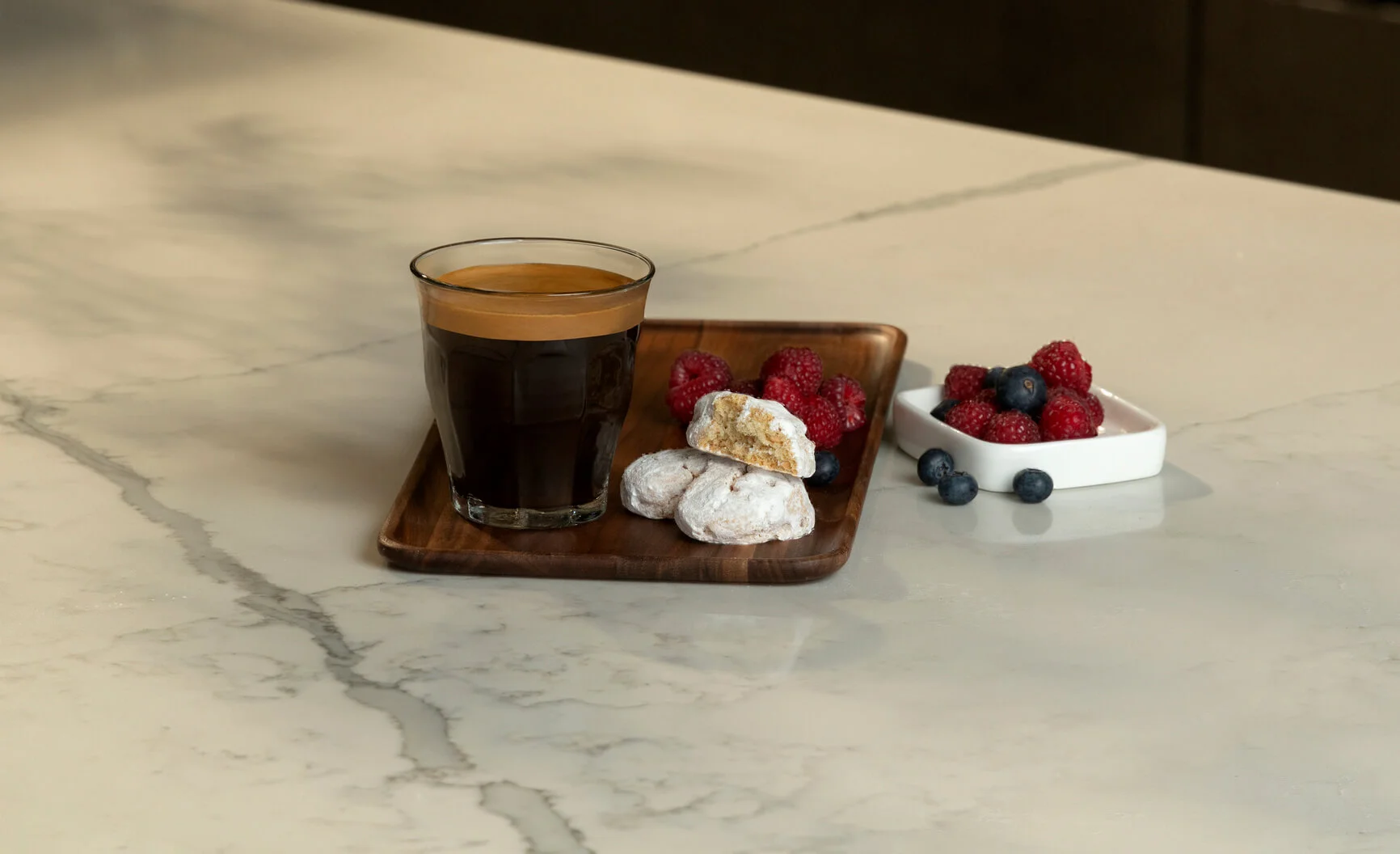
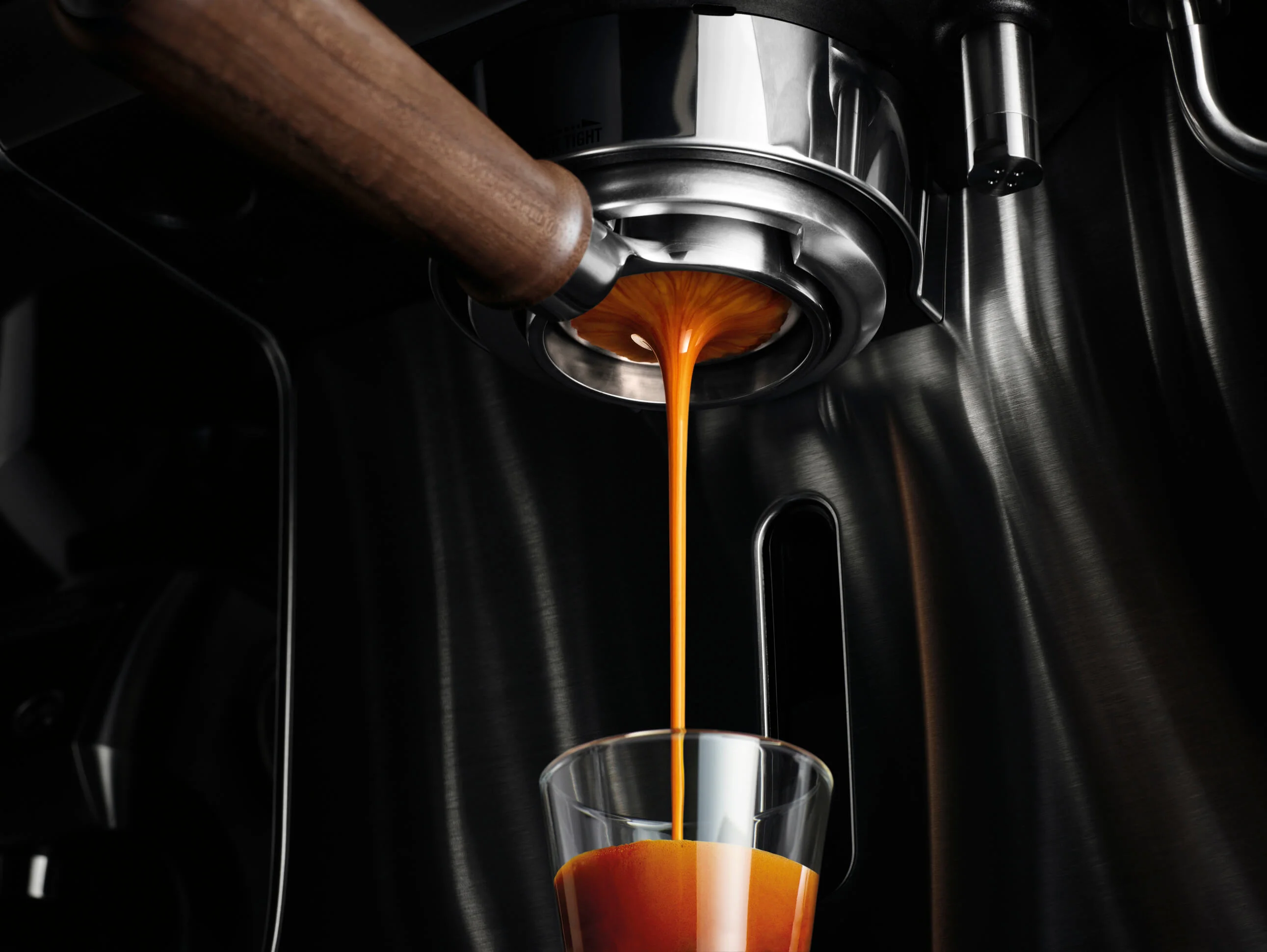
How do you know when your espresso is dialled-in? When you taste the shot, it should have moderate sweetness, pleasant acidity, a well-balanced body, and a smooth finish with thick crema on top. In other words, you should enjoy the taste of it.
Key variables that affect espresso extraction
When dialling in your espresso, pay attention to these variables:
● Grind size – The most important variable in espresso extraction. A fine grind increases resistance and extraction, while a coarser grind allows faster flow and reduces extraction. In most cases, adjusting grind size alone accounts for the vast majority of improvements when dialing in espresso.
● Dose – For a single 30-millilitre shot, use a 9-to-14-gram dose. For a 60-millilitre double shot of espresso, use 18 to 20 grams.
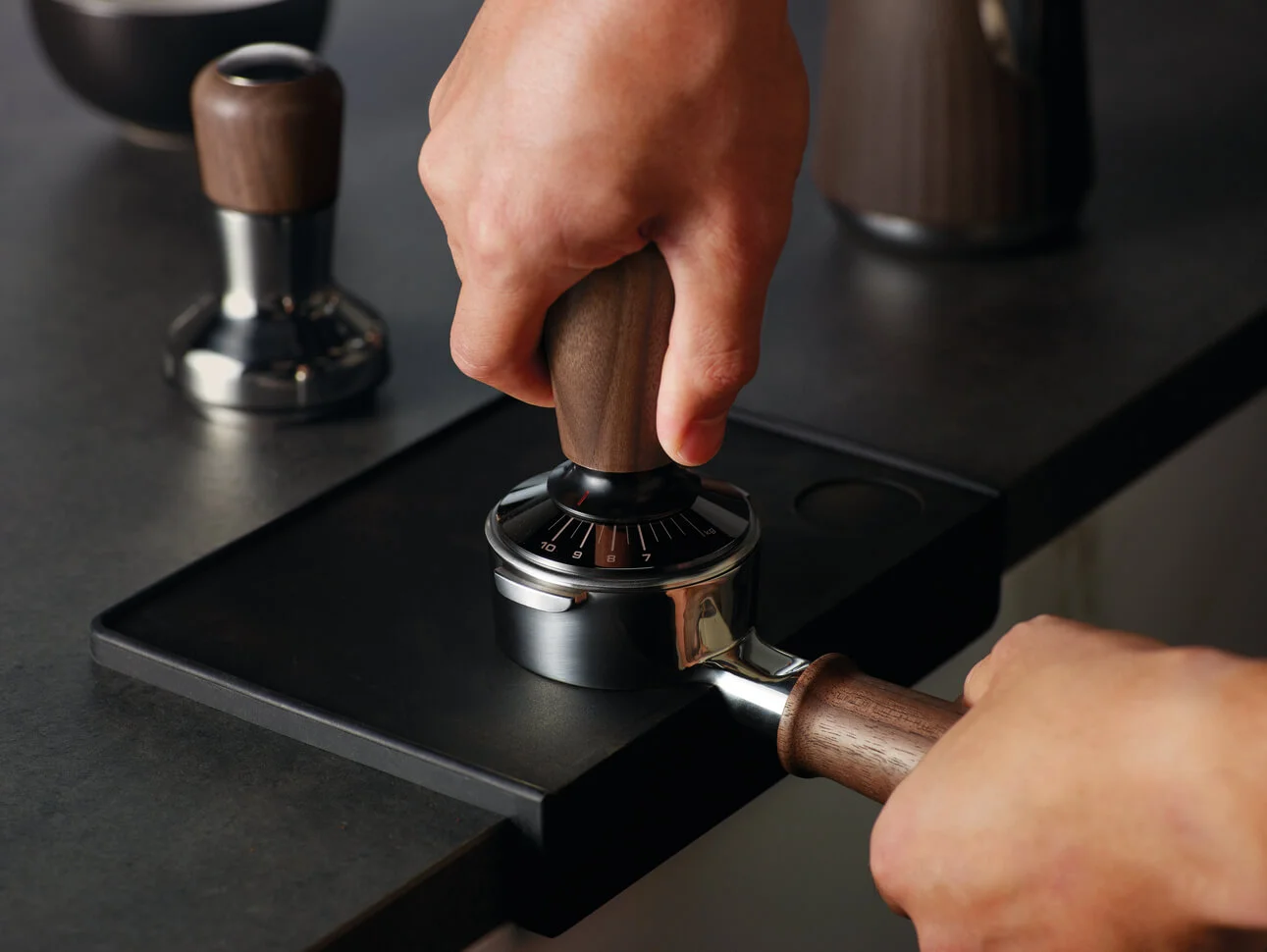
● Tamping – Apply even, firm pressure when tamping espresso to create a consistent puck. Tamping should remain constant shot to shot, allowing grind size and extraction time to be adjusted for dialing in flavor.
● Extraction time – Target an extraction time of 25 to 30 seconds for a balanced espresso shot.
● Brew ratio and yield – A 1:2 brew ratio means you'll get 2 grams of liquid espresso for every 1 gram of ground coffee used. For example, when pulling a double shot, you might use an 18-gram dose and end up with 36 grams of espresso.
● Water temperature – Optimal coffee water temperature for espresso is generally 92 to 96°C. But with darker roasts, you may be able to use a water temperature as low as 88°C.
Step-by-step guide to dialling in espresso
Here's how to dial in your espresso, step by step:
1. Weigh your coffee – Measure the dose precisely to keep variables stable. The weight of your espresso can affect the flavour of your end result. Use 9 to 14 grams for a single shot and 18 to 20 grams for a double shot. Whatever weight you decide to use, just keep it consistent from shot to shot.
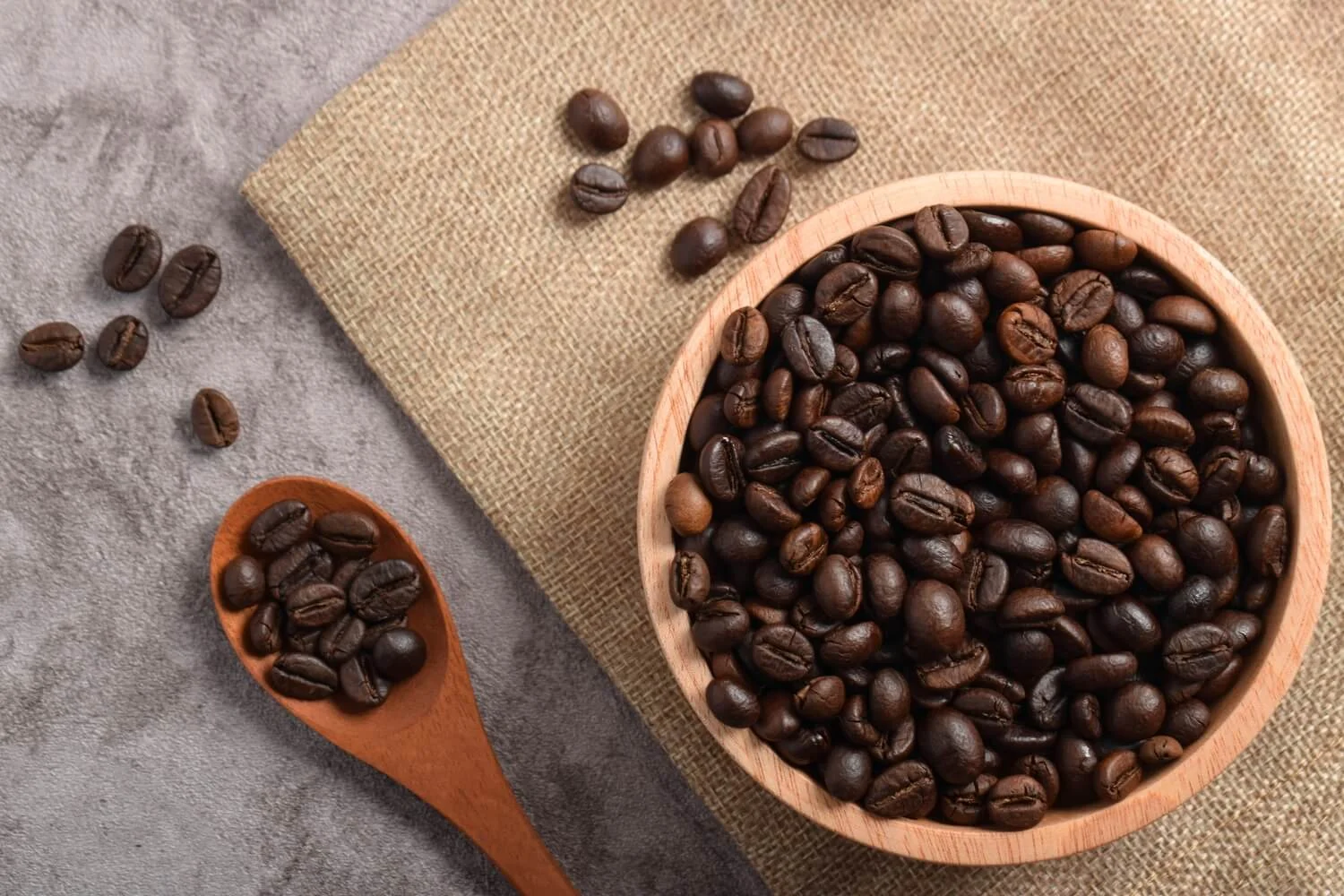
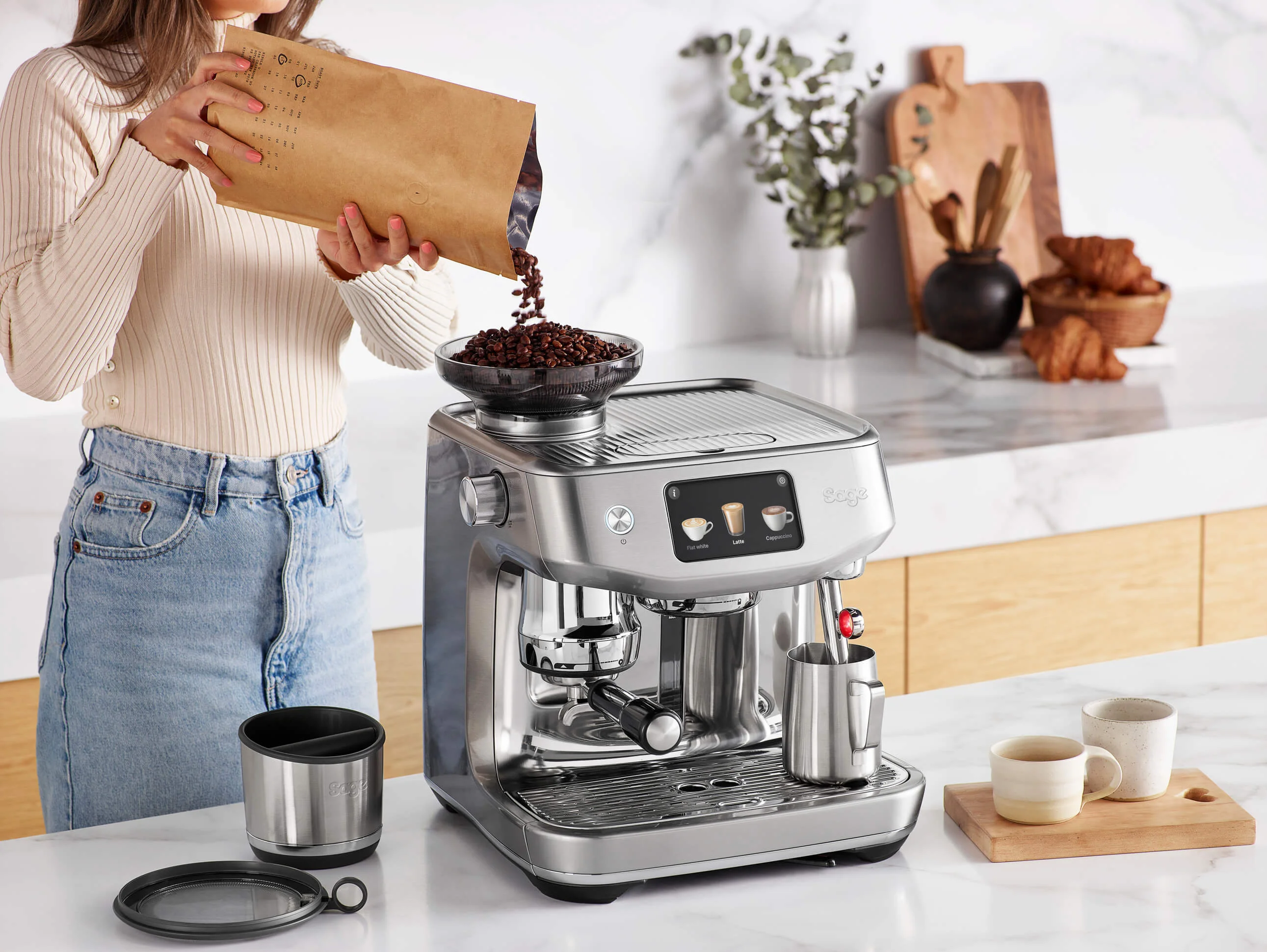
2. Grind your beans – Aim for a very fine particle size with a consistency resembling table salt for more resistance for the high-pressure extraction. A high-quality burr grinder with precise settings is ideal.
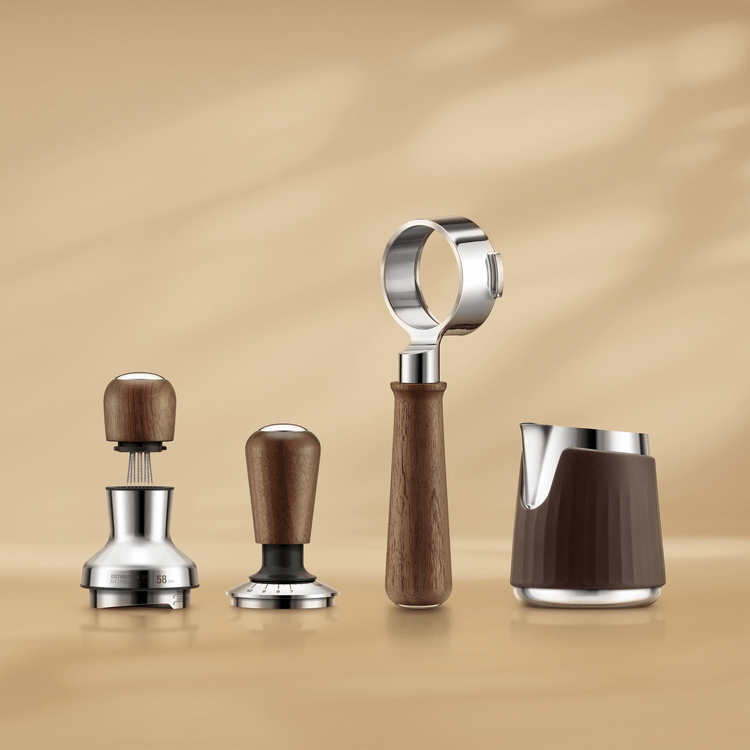
3. Distribute and tamp – Ensure the coffee bed is evenly distributed in the portafilter, then tamp firmly to create a level puck. This prevents water from channelling for more consistent extraction.
4. Pull a test shot – Start a timer and extract for 25 to 30 seconds, observing the flow and if there's any channelling. Note the exact number of seconds for the extraction time, and weigh the shot to get the yield.
5. Taste and assess – If the shot tastes sour or watery, it may be under-extracted, requiring a finer grind or a longer extraction time. A bitter taste or drying mouthfeel could indicate over-extraction, calling for a slightly coarser grind or a reduced extraction time.
6. Adjust accordingly – Make small adjustments and continue to pull test shots until the flavour and texture are just right.
Troubleshooting common espresso issues
Here are common brewing issues and how to troubleshoot them when dialling in your espresso:
● Sour or sharp flavours – This usually means the espresso shot was under-extracted. Try a finer grind size to increase resistance, or lengthen the extraction time by two to three seconds. If adjusting grind size and time doesn’t resolve the issue, a slight increase in water temperature can help—but this should be a last resort.
● Bitter or harsh taste – A bitter espresso taste or harsh flavour points to over-extraction. For the next test shot, use a slightly coarser grind size or shorten the brewing time by a few seconds.
● Shot running too fast – If your espresso shots are running too fast, they might be channelling because the tamp wasn't firm or level enough. This can also happen with a too-coarse grind size. Try tamping again with firm, even pressure or use slightly finer grounds.
● Shot running too slow – If your shots are running too slow, the tamp may actually be too tight or the grind size could be too fine. Try tamping again firmly without excessive pressure. Or adjust the grind so it's still fine but more like the consistency of table salt.
● Uneven extraction – This can happen with uneven tamping. To improve flow distribution when pulling shots, make sure the coffee bed is even before tamping firmly to get a level puck.
How quality espresso machines help you dial in espresso
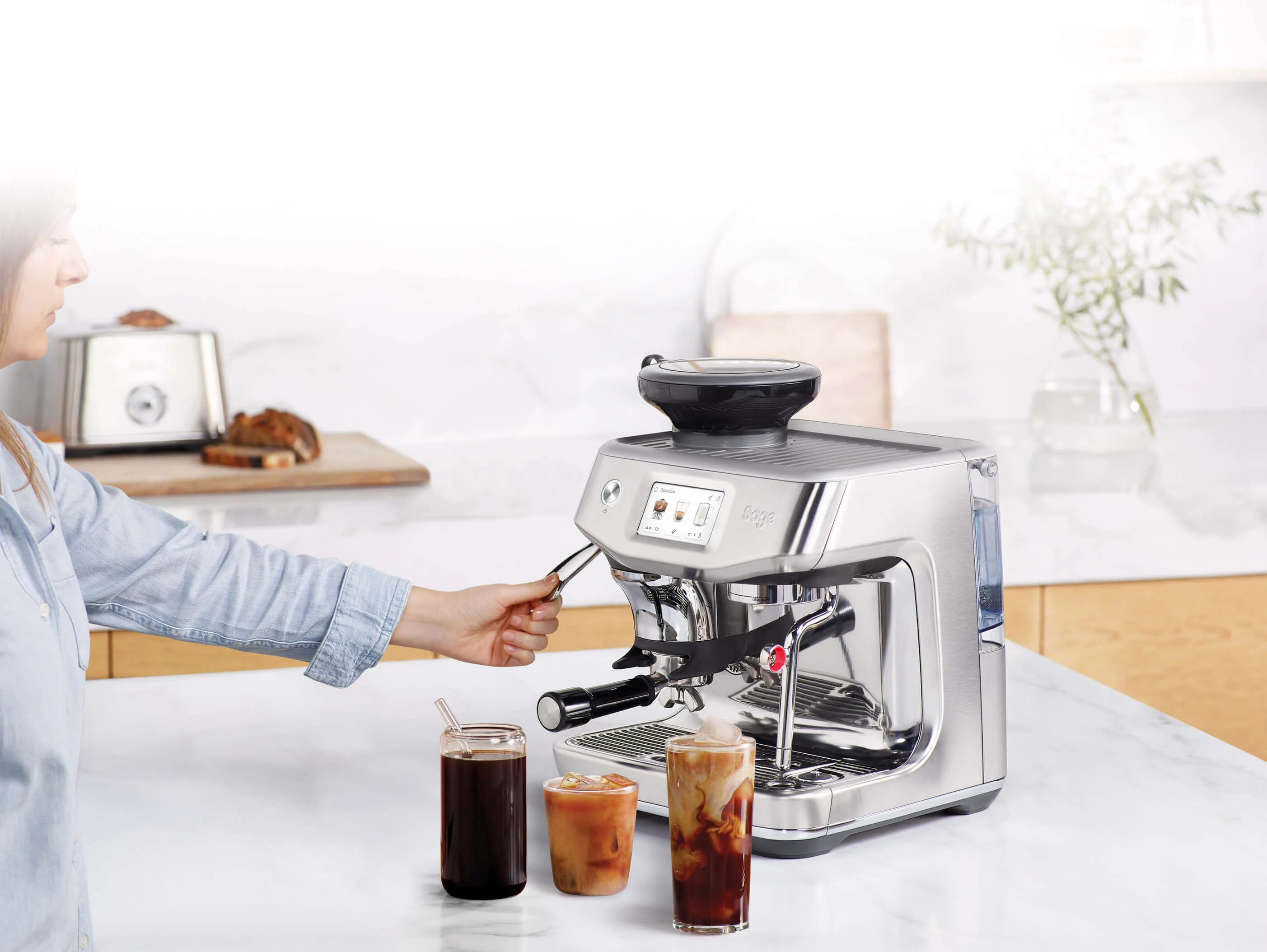
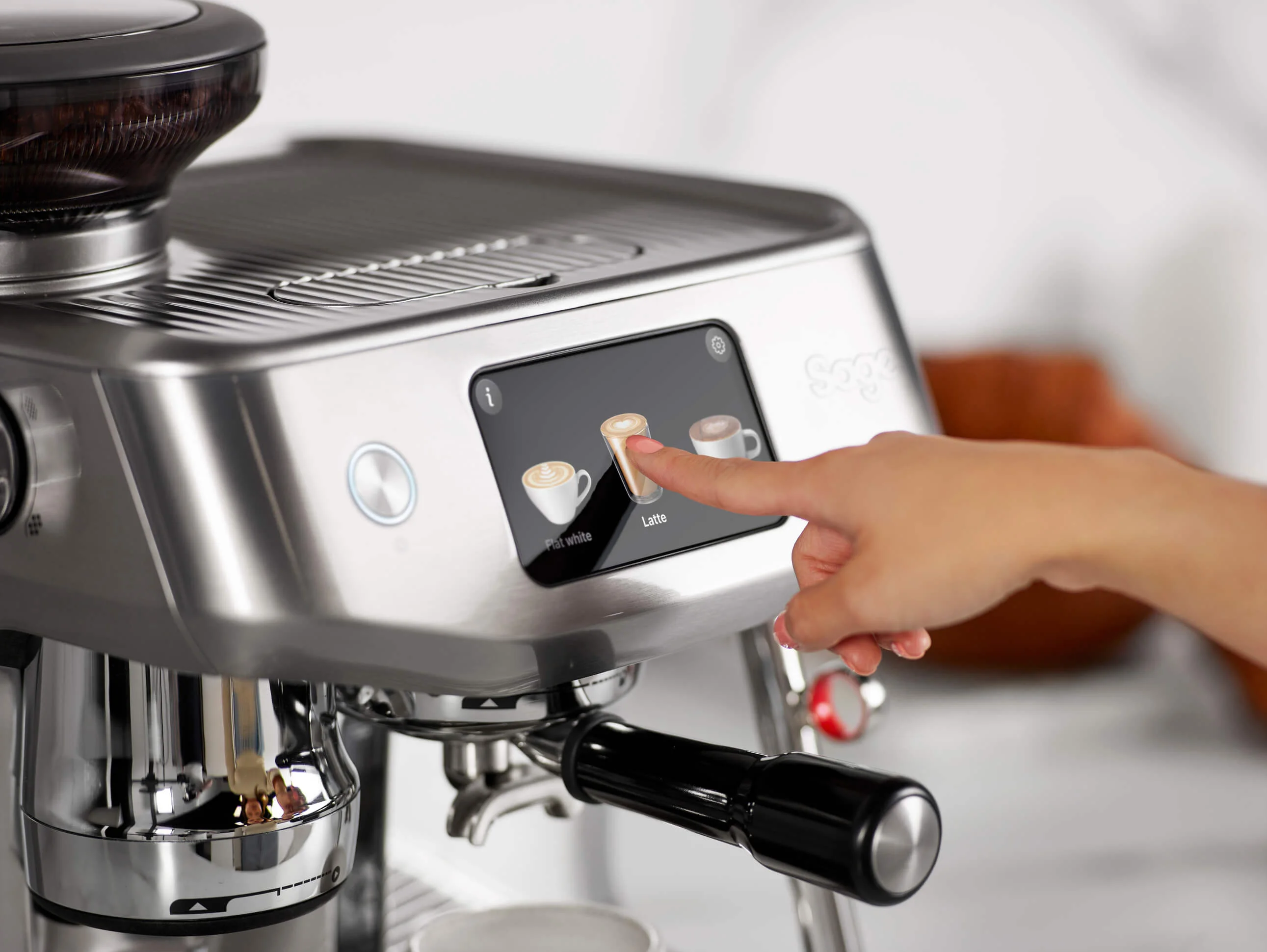
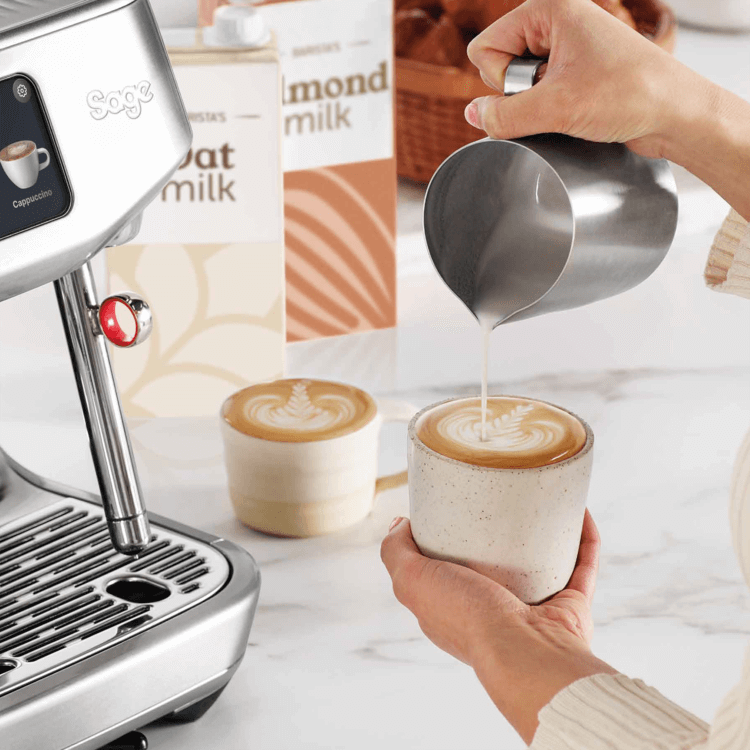
A premium automatic or semi-automatic espresso machine can help you dial in your espresso and pull consistently great-tasting, full-bodied shots with perfect crema, time after time.
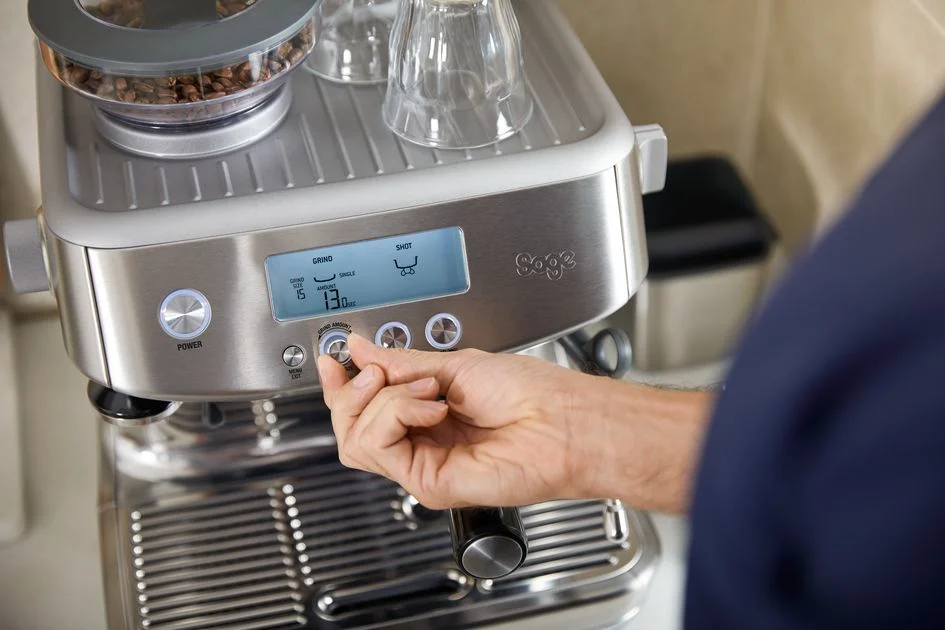
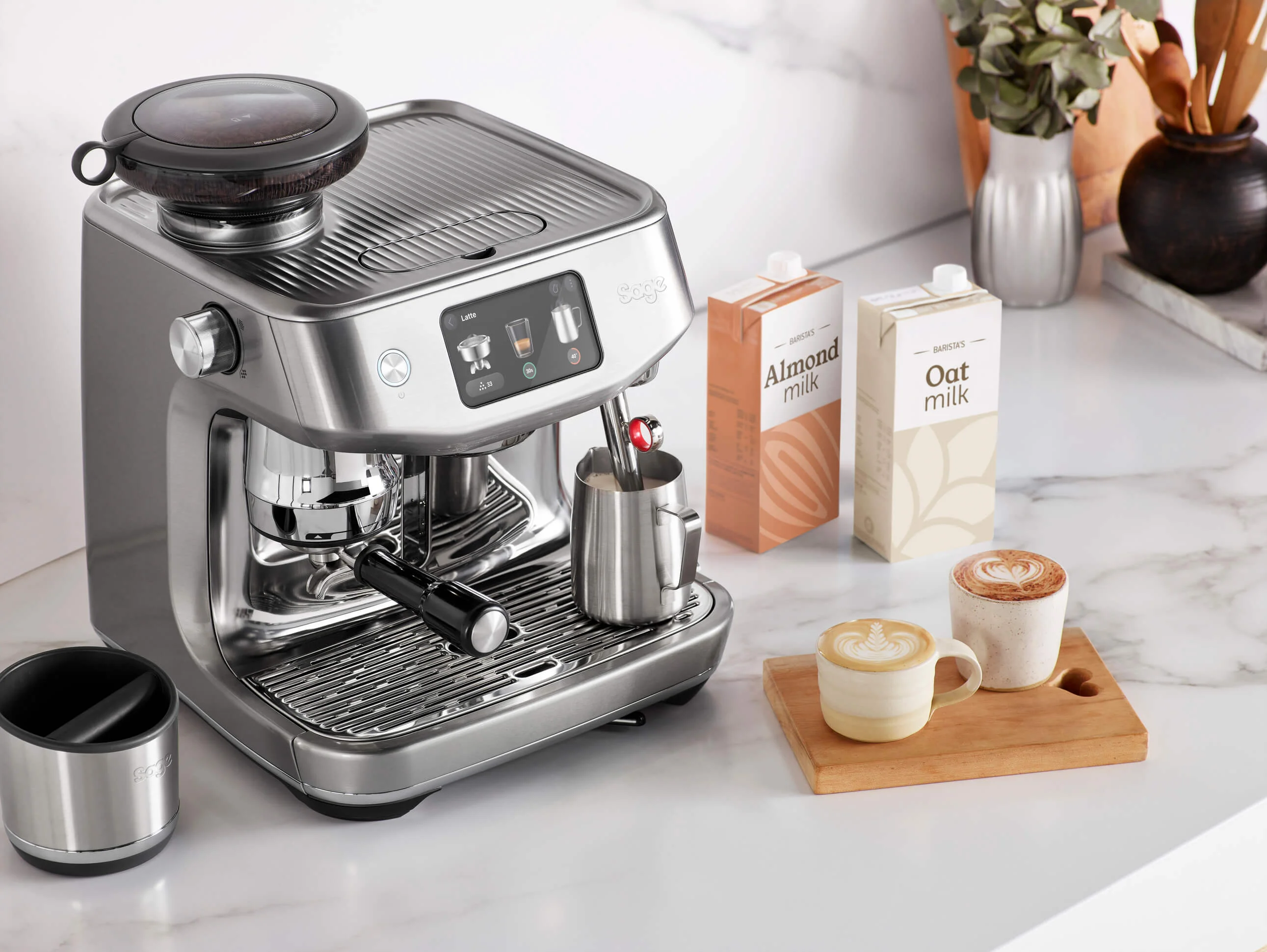
Many of the innovative espresso machines from Sage have integrated conical burr grinders for a consistent particle size that works best with espresso. They use PID digital temperature controls for stable water temperature, along with low-pressure pre-infusion for even extraction and precise pressure and shot timers to guide adjustments. The Impress models also feature assisted tamping technology.
Getting cafe-quality results every time
Dialling in espresso is a skill that improves with practice. If you're willing to learn as you go, make small adjustments, and taste-test a lot of shots, you'll eventually work out the exact settings, weights, ratios, and extraction time to achieve rich, full-bodied, café-quality espresso.
Sage machines empower home brewers with barista-level control and precision. Explore espresso machines with assisted tamping and PID temperature control.
Sources:
1. Perfect Daily Cup. A Guide To Dialling In Espresso. https://perfectdailygrind.com/2020/07/a-guide-to-dialling-in-espresso/
2. Scientific Reports. The role of fines in espresso extraction dynamics. https://pmc.ncbi.nlm.nih.gov/articles/PMC10920694/
3. Food Chemistry. Extraction of espresso coffee by using gradient of temperature. Effect on physicochemical and sensorial characteristics of espresso. https://www.sciencedirect.com/science/article/abs/pii/S0308814616311530
4. CoffeeGeek. Dialing in Espresso in Three Shots. https://coffeegeek.com/opinions/coffee-at-the-moment/dialing-in-espresso-in-three-shots/
5. Specialty Coffee Association (SCA). Defining the Ever-Changing Espresso. https://sca.coffee/sca-news/25-magazine/issue-3/defining-ever-changing-espresso-25-magazine-issue-3
6. CoffeeGeek. Maybe the Italians Were On To Something: Espresso Doses. https://coffeegeek.com/blog/techniques/maybe-the-italians-were-on-to-something-espresso-doses/
7. Daily Coffee News. The Short Shot: New Study Challenges Espresso as We Know It. https://dailycoffeenews.com/2020/01/22/the-short-shot-new-study-challenges-espresso-as-we-know-it/
8. Perfect Daily Grind. Pressure Profiles, Pulsing & The 3 Phases of Espresso Extraction. https://perfectdailygrind.com/2019/07/pressure-profiles-pulsing-the-3-phases-of-espresso-extraction/
9. Perfect Daily Grind. Barista-Certified Rules for Dialing In A Coffee Grinder. https://perfectdailygrind.com/2015/07/barista-certified-rules-for-dialing-in-your-coffee-grinder/
10. Foods. Influence of the Brewing Temperature on the Taste of Espresso. https://pmc.ncbi.nlm.nih.gov/articles/PMC7022572/
11. Perfect Daily Grind. How To Better Control Your Espresso's Brew Ratio. https://perfectdailygrind.com/2018/04/how-to-control-brew-ratio-for-better-espresso/
12. Perfect Daily Grind. Why are distribution and tamping so important for quality espresso?. https://perfectdailygrind.com/2023/03/why-are-distribution-and-tamping-important-for-espresso/