Choosing between a slow cooker vs. pressure cooker can shape how you plan weeknight dinners and weekend meal prep.
Slow cooker vs. pressure cooker: Which is better?
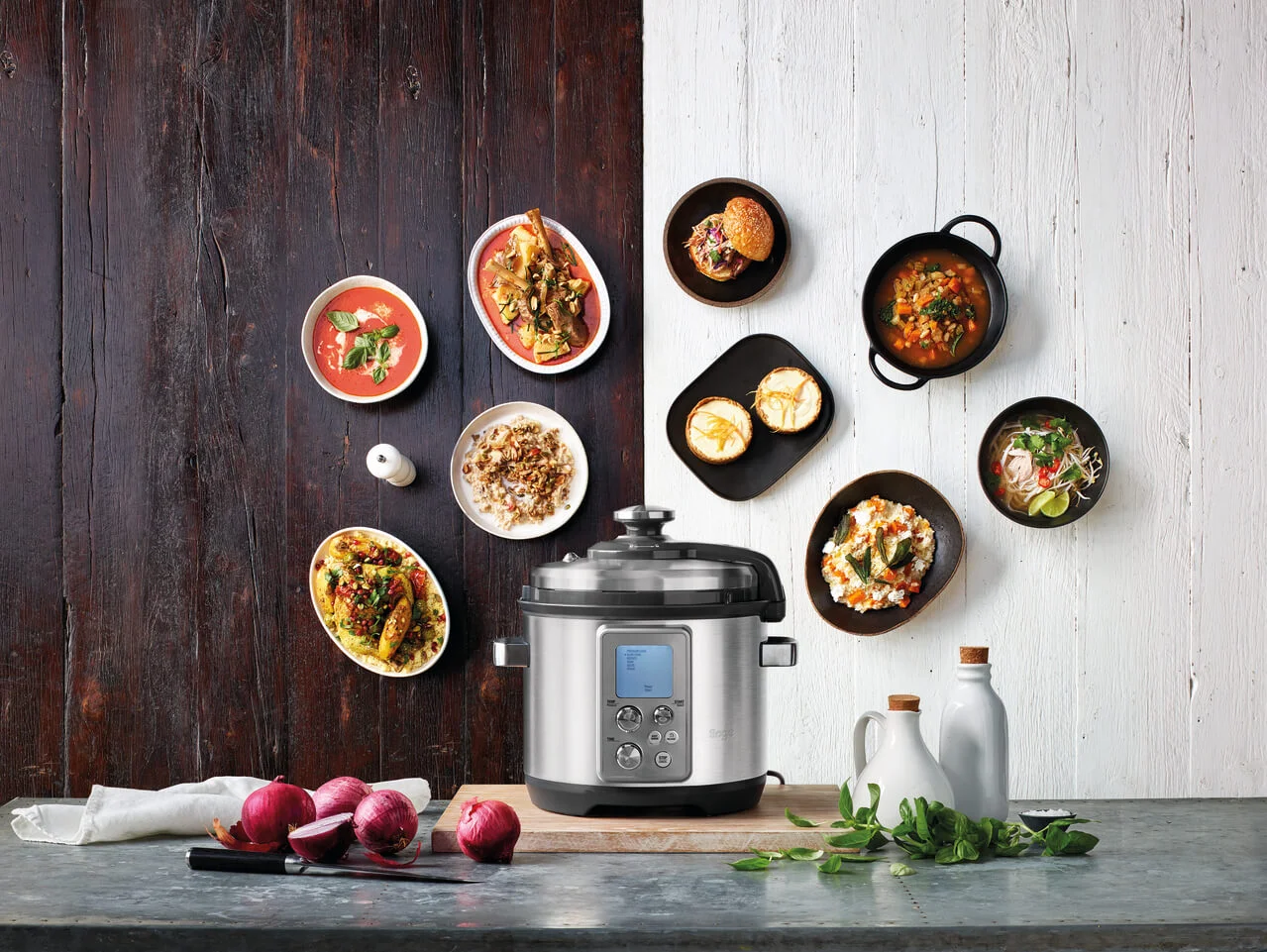
Both appliances produce tender, flavourful dishes, but they work in very different ways that suit different cooking styles and schedules, especially now that advanced multi-cookers offer both functions in a single appliance.
Before we continue, here’s a quick overview of what this guide will cover:
● How slow cookers and pressure cookers differ in method and timing
● When to use each appliance for the best results
● What types of recipes suit each cooking style
● Key advantages and limitations of both approaches
● Why a multicooker that performs both functions may be the most flexible option
You’ll come away with a better understanding of how each method works and which option fits most naturally into your day-to-day cooking.
What's the difference between a slow cooker and a pressure cooker?
A slow cooker uses low, steady heat over several hours to gently cook food, while a pressure cooker traps steam to create a high temperature environment that cooks food much faster than traditional methods. The science behind this difference is straightforward: water temperature will not rise above 100°C unless pressure is applied, which is why pressure cookers can achieve much higher cooking temperatures.
When to use a slow cooker
A slow cooker shines when you want dinner ready the moment you walk through the door. According to food-safety guidance from the USDA, slow cookers are designed to maintain steady, food-safe temperatures for several hours, making them well-suited to dishes that simmer gently throughout the day without needing constant supervision. This makes planning easier and helps you save time later, especially on busy weekdays.
Slow cooking works especially well for dishes that improve with long, gentle heat, allowing flavours to deepen with minimal effort. Many of the best slow cooker meals make the most of this extended cooking time:
● Stews and casseroles: Long cooking breaks down tough fibres
● Soups and broths: Flavours meld and deepen over time
● Braised meats: Tough cuts become incredibly tender
● Porridge: Perfect texture without constant stirring
Beyond daily meals, slow cookers excel at meal prep, allowing you to cook large batches with very little hands-on time.
When to use a pressure cooker
A pressure cooker becomes invaluable on busy weeknights when you need a meal on the table quickly. It dramatically reduces cooking times for ingredients that normally take hours, and research shows that pressure cooking preserves key nutrients even with rapid cooking. Once you understand how to use a pressure cooker, the high-temperature environment also softens tougher cuts with ease, giving you tender results in a fraction of the usual time.
Pressure cookers excel with these ingredients:
● Tough cuts of meat: Become tender in a fraction of the time
● Dried beans and legumes: No overnight soaking required
● Grains like rice: Perfect texture every time
● Quick weeknight meals: Full flavours in under an hour
Comparing cooking results and flavour
Slow cookers and pressure cookers create distinct textures and flavours because of how each method applies heat. Here’s how they differ.
Texture
Slow cookers use low, steady heat that gradually breaks down proteins, producing very tender results. Meats often become so soft that they fall apart easily.
Pressure cookers take advantage of high temperature, which cooks food quickly while helping ingredients retain their structure. The result is firm yet tender textures that hold their shape.
Flavour profile
When using a slow cooker, the extended cooking time allows ingredients to blend harmoniously, creating mellow, well-rounded flavours.
Fast cooking under pressure produces bold, concentrated flavours, with more distinction between ingredients. Partial starch gelatinisation supports a satisfying texture without over-softening.
Cooking time
Slow cookers typically take 4–8 hours, making them ideal for all-day cooking or leaving meals unattended.
Pressure cookers usually require 15–60 minutes, perfect for quick meals on busy days.
Best uses
Slow cookers excel at making stews, casseroles, pot roasts, soups and other dishes that benefit from long, gentle cooking.
Risotto, beans, grains and fast weeknight meals that need tender results in less time are best prepared using a pressure cooker.
These differences make it easier to choose the method that aligns with your preferred textures, flavours and timing. With that in mind, it’s also important to understand how each appliance fits into everyday use.
Ease of use, safety and practicality
Modern pressure cookers are completely safe when used properly, featuring multiple safety mechanisms like locking lids and controlled steam release valves. Meanwhile, slow cookers require almost no attention once you've added ingredients and set the timer. Regardless of which appliance you choose, it's essential to ensure all food reaches minimum internal temperatures for safe consumption.
Both appliances are straightforward to operate, though they come with different practical considerations:
● Maintenance: Pressure cookers need occasional sealing ring replacement, while slow cookers just need basic cleaning
● Capacity: Choose based on your household size and cooking frequency
● Worktop space: Consider whether you have room for separate appliances
How do you choose between a slow cooker and pressure cooker?
Your choice ultimately depends on your cooking style and daily routine. Consider which scenario better matches your lifestyle needs.
When to choose a slow cooker
Pick a slow cooker if you prefer hands-off cooking that requires minimal attention. You'll particularly appreciate it if you enjoy deep, complex flavours that develop over time and want meals ready when you return home.
When to choose a pressure cooker
Choose a pressure cooker if you often need dinner on the table quickly. It's ideal if you frequently cook dried beans, grains, or tough cuts of meat, and you value versatility in your kitchen appliances.
Why Sage multi-cookers can handle both
Rather than choosing between the two methods, modern appliances now combine both functions in a single pot, giving you maximum flexibility for any cooking situation.
Sage offers smart multi-cookers that deliver precision, whether you're slow cooking or pressure cooking. An advanced slow cooker multi-cooker like the Fast Slow GO™ includes smart programmes that automatically adjust time, temperature, and pressure for optimal results.
With features like hands-free steam release and durable construction, an all-in-one cooker eliminates guesswork and allows you to cook with complete confidence.
Making the most of slow and fast cooking
Both slow cookers and pressure cookers excel at creating delicious meals, each offering a different approach that suits different lifestyles. The best choice comes down to how you like to cook, and whether you prefer the steady, hands-off ease of slow cooking or the speed and efficiency of pressure cooking.
Whichever method fits your routine, well-designed kitchen appliances make all the difference. Sage’s commitment to performance, thoughtful engineering and intuitive controls helps you achieve consistently great results, making day-to-day cooking simpler, smoother and more delicious.
Sources:
1. Pennsylvania State University Extension. Selecting a Canning or Processing Method. https://extension.psu.edu/selecting-a-canning-or-processing-method
2. PubMed National Institutes of Health. Effects of pressure-cooking and freeze-drying on the quality and functionality of instant black rice: Starch crystallinity, bioactive properties, and digestibility. https://pubmed.ncbi.nlm.nih.gov/40451351/
3. USDA Food Safety and Inspection Service. Safe Minimum Internal Temperature Chart. https://www.fsis.usda.gov/food-safety/safe-food-handling-and-preparation/food-safety-basics/safe-temperature-chart
4. USDA Food Safety and Inspection Service. Slow Cookers and Food Safety. https://www.fsis.usda.gov/food-safety/safe-food-handling-and-preparation/food-safety-basics/slow-cookers-and-food-safety