At first glance, food processors and mixers might seem interchangeable, but they’re built for very different tasks.
Difference between food processor vs. mixer
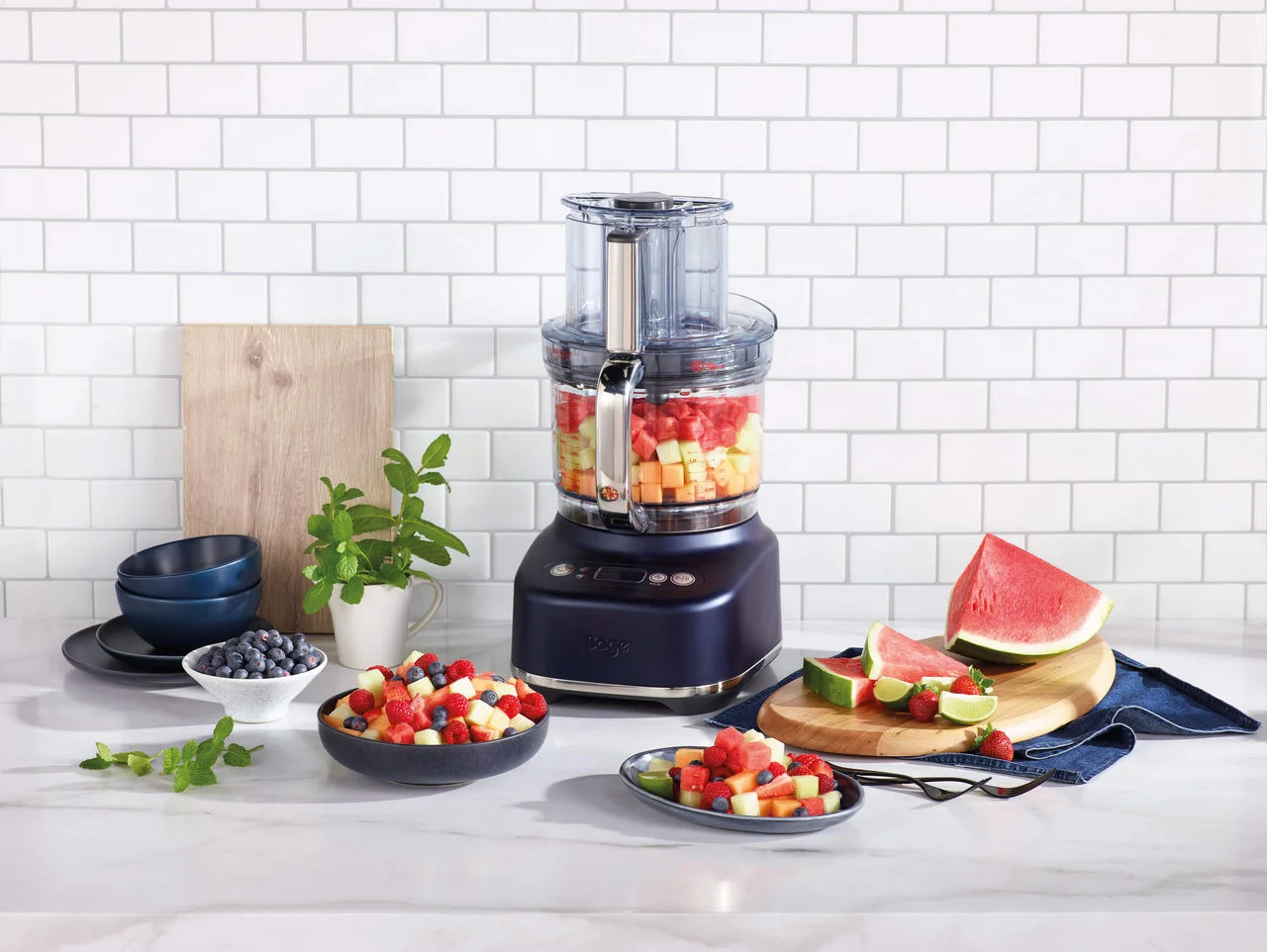
One handles the prep; the other takes care of the mixing. While food processors are ideal for chopping, slicing, and grating, mixers are made for baking jobs like kneading dough or whipping cream.
If you’re deciding which one deserves a spot in your kitchen, it helps to understand how each appliance works and what it does best. Below, we break down the key differences so you can find the right fit for the way you cook.
What is a food processor, and what is it best used for?
A food processor is a versatile appliance designed to handle a wide range of food prep tasks. It excels at chopping, slicing, shredding, mixing, grating, and even puréeing. Most models come with an assortment of blades and attachments, allowing you to tackle everything from rough-cut vegetables to silky dips or dough for bread and pizza.
This kind of machine is ideal for everyday cooking, particularly if you’re preparing meals from scratch. You can use a food processor to make pesto, coleslaw, falafel mix, or nut butters, and with the right accessories, it can even help with more advanced recipes that call for fine grating or layered slicing. Some food processors also have built-in features for whipping, emulsifying, or making smoothies and soups, depending on the model.
What is a mixer, and what is it best used for?
A mixer, particularly a stand mixer, is primarily designed for combining ingredients, especially in baking. It’s built for mixing cake batters, whipping cream, kneading dough, and preparing frostings or meringues. While hand mixers and immersion blenders offer some flexibility, stand mixers deliver consistent results with more power and capacity, often with attachments like a whisk, dough hook, and flat beater. Some even offer pasta-making or meat-grinding accessories, further extending their use beyond baking.
So, while food processors are better for prep work, mixers shine when you're working with wet batters, bread doughs, or anything that benefits from long mixing times.
Key differences between food processors and mixers
While both appliances have their place in the kitchen, they’re built for very different purposes. Understanding how they compare in terms of functionality, attachments, and everyday use can help you decide which one suits your needs best, or whether having both is worth the cupboard space. Here's a closer look at what sets them apart.
Functions and capabilities
A food processor offers a broad range of functions, from chopping, slicing, and grating to kneading and blending. It’s essentially a prep machine, helping you get through large amounts of ingredients quickly, especially once you know how to use a food processor effectively. A stand mixer, on the other hand, is designed specifically for mixing, kneading, whipping, and beating. While it won’t slice a carrot or dice an onion, it handles heavier doughs and softer mixtures with ease.
Blade and attachment types
Processors usually come with an S-shaped blade, slicing discs, grating plates, and other attachments suited to prep tasks. Many offer colour-coded parts, making it easier to switch between accessories mid-preparation. Mixers rely on beaters, dough hooks, and whisks, each engineered for a specific texture or result. While both appliances offer expanded features through optional add-ons, they aren’t interchangeable in day-to-day cooking.
Ideal ingredients and tasks
If you’re regularly handling raw vegetables, nuts, herbs, or cheeses, a food processor is likely the better fit. It takes on repetitive prep like a pro and is especially useful for batch cooking. A mixer, however, is the go-to for anything that requires aeration or thorough kneading, such as brioche, sponge cakes, or whipped cream.
Size and storage considerations
Food processors are often more compact, with stackable parts that store neatly. Stand mixers are heavier, typically larger, and need more counter space, but they’re also more stable for longer mixing times. If storage is tight, consider how often you’ll use each appliance and which one needs a permanent spot on your kitchen counter.
Which one should you choose for your kitchen?
The right choice often comes down to how you cook—and how often. While some households lean heavily towards baking, others focus on day-to-day meal prep, and many fall somewhere in between. Whether you’re looking for a dedicated tool or something more flexible, here’s how each appliance fits into different cooking routines.
Best for bakers
If your focus is on cakes, pastries, and breads, a stand mixer is a wise investment. It takes the heavy lifting out of kneading, offers better control over speed, and can be paired with accessories for added flexibility.
Best for everyday meal prep
For quick weekday dinners, a food processor offers more versatile options. From grating cheese to chopping onions, it’s a time-saver for home cooks who want to prep more efficiently without sacrificing texture or presentation.
Best for multifunctional use
Some households need a bit of both. If you’re someone who bakes often but also prepares a lot of vegetables, juices, and sauces from scratch, you might find that owning both appliances gives you the most flexibility. A blender could also round out your toolkit for smoothies, hot soups, or lighter purées.
Finding the right appliance for your needs
Choosing between a food processor vs. mixer comes down to how you cook, what you cook, and how often. If your routine involves a lot of raw vegetables, slicing, or sauce prep, a food processor is likely to suit you best. If baking is your focus and you want consistent results with cake batters, biscuits, or bread, then a stand mixer will be a more suitable choice.
For some, the ideal setup includes both, making it easy to move between prep and baking tasks without slowing down. With thoughtfully designed kitchen appliances from Sage, you can expect reliable performance, versatility, and user-friendly features, whichever appliance you reach for. Having the right tools in place makes a noticeable difference in how smoothly your kitchen runs.
Sources:
1. Consumer Reports. How to Use an Immersion Blender. www.consumerreports.org/
2. The Kitchn. A Guide to the Food Processor Blades and Discs You’re Not Using. https://www.thekitchn.com/a-guide-to-the-food-processor-blades-and-discs-youre-not-using-228700