Whether you're outfitting a new kitchen or replacing an ageing appliance, buying a microwave can be more nuanced than it first appears.
Buying a microwave: What to look for
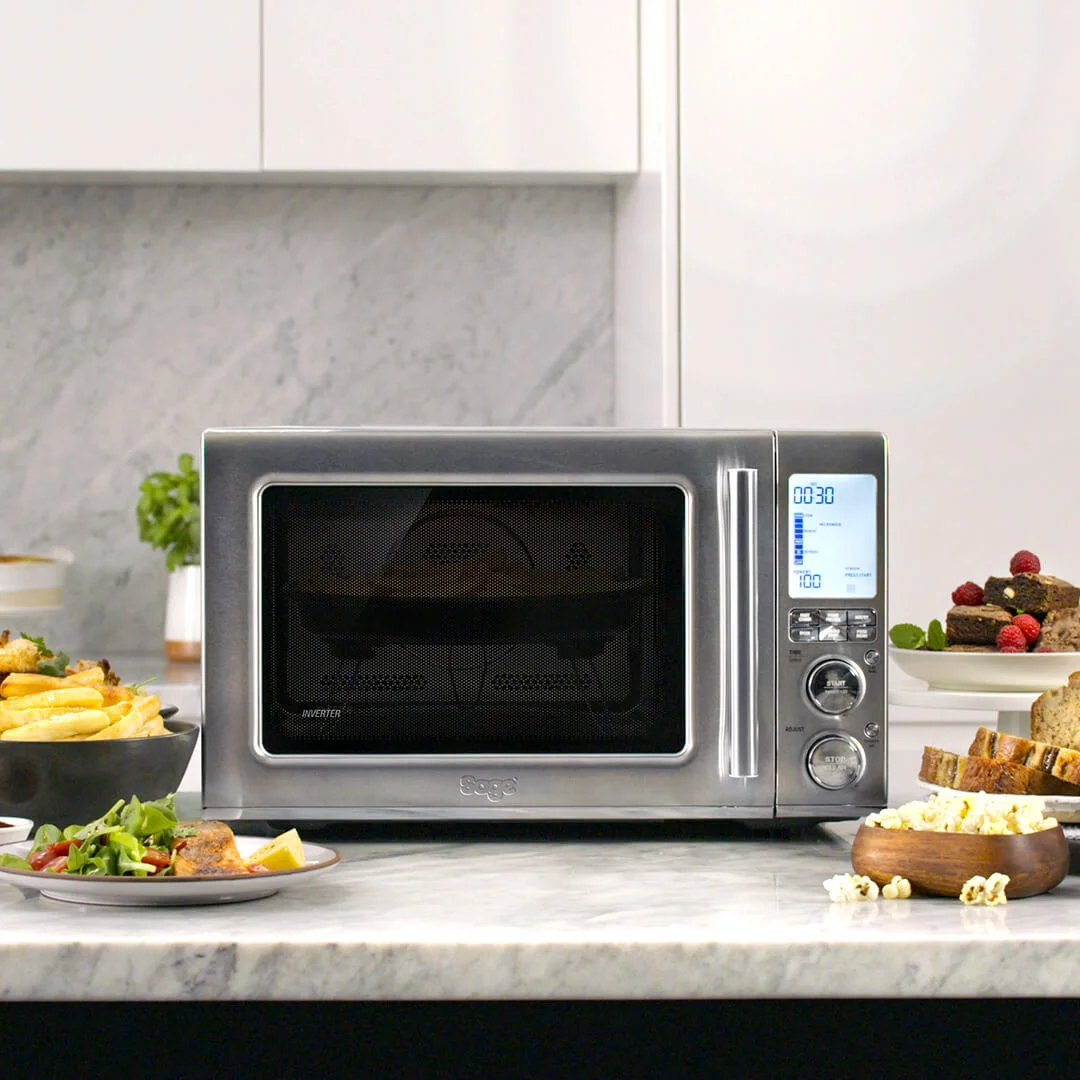
Alongside ovens and air fryers, microwaves play a key role in today’s home cooking routines—offering speed, convenience, and versatility in a compact unit. From reheating leftovers to defrosting meats or steaming vegetables, this dependable kitchen staple does much more than just heat food.
But with so many models available, each promising a different blend of features, sizes, and functions, how do you know which one is right for your needs? In this microwave buying guide, we’ll explore the various types of microwave ovens, explain key features to look for, and walk through how to choose a microwave that fits seamlessly into your home.
Types of microwaves available
When it comes to choosing the best microwave for your kitchen, understanding the available types is the first step. Each offers a different cooking style and range of functionality, from compact countertop microwaves to fully integrated models, so think about what kind of meals you make and how you plan to use the appliance.
Solo microwaves for basic heating
Solo microwaves are the most common type of standalone unit, designed for straightforward cooking tasks such as reheating, defrosting, and preparing simple meals. These entry-level models are ideal for anyone who wants a reliable microwave oven without the added complexity of grills or convection features. Compact in size, they’re often the go-to for small kitchens, student flats, or as a secondary unit in larger homes.
Grill microwaves for crisping
If you like your food with a golden finish, a grill microwave might be the better choice. These models include a built-in grill element, allowing you to brown the tops of dishes like lasagne, melt cheese evenly, or toast bread. Grill microwaves offer more flexibility than solo units while remaining easy to use, perfect for quick meals with a little extra texture and taste.
Combination microwaves with oven features
Combination microwaves—also known as convection or combi microwaves—combine the functions of a standard microwave, grill, and fan-assisted oven in one appliance. They’re especially useful in smaller kitchens without space for a traditional oven, or for cooks who want to speed up cooking times without sacrificing quality. These units often include settings for baking, roasting, and steaming, giving you full cooking capability in a single compact design.
Key features to consider
Beyond the type of microwave, several other factors will influence your decision. From capacity to cooking settings, here's what to keep an eye on.
Power levels and wattage explained
Microwave power is measured in watts, with most units ranging from 700W to 1,200W. The higher the wattage, the quicker and more evenly your food will cook. For everyday cooking, reheating, or defrosting, a unit with 800–1,000W will suit most households. If you regularly prepare larger meals or want restaurant-style results, opting for higher wattage gives you better performance and more consistent results.
Capacity and size based on household needs
Microwave capacity is usually listed in litres, and the right size depends on your typical portion sizes and available counter or built-in space. Compact models with 17–20 litres are ideal for individuals or small kitchens, while families may prefer 25–30-litre units for larger dishes and full meals. If you're working with cabinetry, integrated microwave options may be a better fit.
Auto cook menus, presets, and sensor cooking
Modern microwaves offer an impressive range of cooking presets and auto-cook menus, allowing you to prepare dishes at the touch of a button. Sensor cooking takes this a step further by automatically adjusting time and power based on food humidity and weight. These features offer a convenient way to achieve consistent results without trial and error—great for busy home cooks who want quick, fuss-free meals.
Turntable vs flatbed designs
Traditional microwaves use a turntable to rotate food for even heating, but newer flatbed models achieve the same result using advanced wave distribution technology. Flatbed microwaves offer more usable space and are easier to clean, making them a popular choice for those looking for a sleek, modern design. While turntables still perform well, flatbeds may be better suited for large or irregular-shaped dishes.
Choosing the best microwave for your kitchen
So, how do you choose the best microwave from the many models available? Start by evaluating your daily habits and kitchen layout. Do you mainly use your microwave for quick reheating or steaming vegetables? A solo microwave may be sufficient. Need grilling functions or want to prepare full meals? Look for a combination microwave with oven features.
Also consider:
● Available space – Do you need a freestanding countertop microwave or a built-in unit that fits seamlessly with your kitchen cabinets?
● Features – Prioritise the functions you’ll use most. Grill settings, steam cooking, or sensor technology may be worth the extra cost if you use your microwave frequently.
● Ease of use – Clear digital displays, dial controls, and intuitive programming make a big difference in daily use.
● Aesthetic design – Your microwave should complement the rest of your kitchen appliances, whether you go for stainless steel, matte black, or a minimalist look.
Don't forget to factor in long-term considerations such as reliability, brand reputation, and energy efficiency. When comparing models, always check customer reviews and product warranties. And if you’re torn between different appliances, it may help to compare directly—air fryer vs microwave oven, for instance, if you're deciding where to invest first.
From wattage to features: Making an informed microwave choice
Buying a microwave isn’t just a tick-box exercise—it’s about finding the perfect balance between form and function. With a wide range of products on the market, understanding what to look for will help you avoid unnecessary features and focus on what truly matters for your cooking needs. Whether you’re after compact convenience or a multifunctional powerhouse, the right microwave can transform your kitchen experience, one quick, flavourful dish at a time.
At Sage, we design kitchen appliances with this exact purpose in mind—combining innovation, quality, and ease of use to help you cook with confidence and creativity, every day.
Sources:
1. Department for Business, Energy & Industrial Strategy. Report 9 – domestic appliances, cooking and cooling equipment. https://assets.publishing.service.gov.uk/media/5a759a4be5274a545822cca1/9_Domestic_appliances__cooking_and_cooling_equipment.pdf