From reheating leftovers to preparing crispy chips or roasted vegetables, today’s home cooks rely on appliances that can save time without sacrificing taste.
Air fryer vs. microwave oven: Which is better?
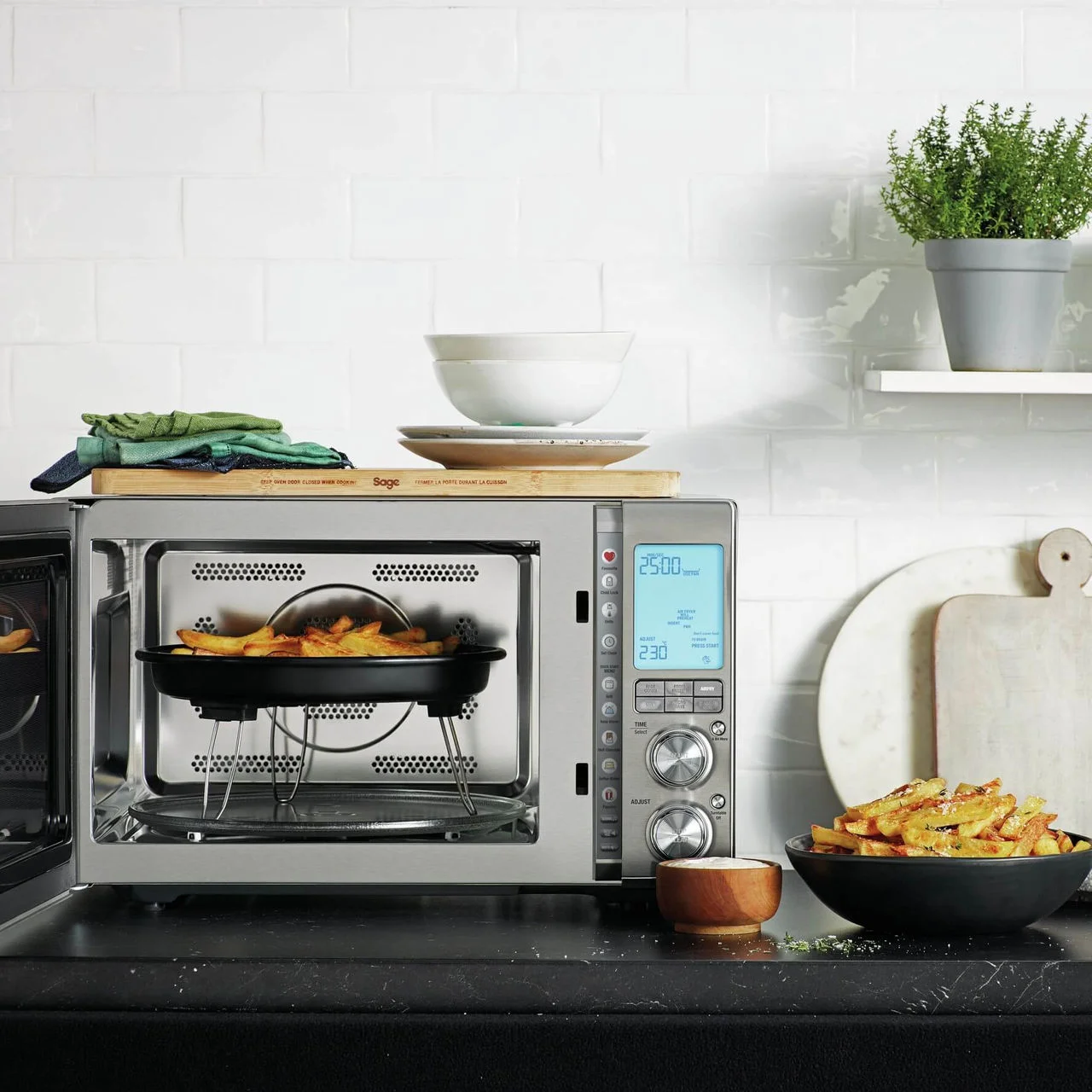
With the growing popularity of ovens and air fryers, and the steady presence of microwaves, it’s no wonder people are asking: air fryer vs. microwave oven—which one is better for the job?
Both appliances offer convenience, speed, and versatility, but they work quite differently and are suited to different kinds of meals. In this guide, we’ll break down the features, performance, and practical considerations to help you decide which one is best for the task at hand.
What is an air fryer, and how does it work?
An air fryer is a compact countertop appliance that uses hot air and a powerful fan to circulate heat around food. It’s essentially a small convection oven, designed to replicate the results of frying without the need to submerge food in oil.
The process is fast and efficient, creating a crispy exterior while cooking the inside evenly. If you’ve ever wondered how an air fryer works, it’s all about high-speed air circulation and precise temperature control.
What you can cook in an air fryer
Air fryers are ideal for meals that benefit from a crisp finish. You can cook food like:
● Chips and wedges
● Breaded fish or chicken
● Roasted vegetables
● Reheated pizza or pastries
● Toasted sandwiches
Many models now include settings for baking, grilling, or even steaming, making them a versatile addition to the kitchen. Whether you want to cook quickly or reduce your oil use, an air fryer is a solid option for everyday meals.
What is a microwave oven, and how does it work?
A microwave oven uses electromagnetic waves to vibrate water molecules within food, generating heat from the inside out. This makes it particularly effective for fast heating, defrosting, and reheating.
Using electromagnetic waves to heat food
Unlike traditional ovens, microwaves don’t rely on ambient heat. They target moisture directly, making them excellent for cooking or reheating high-moisture meals such as soups, stews, vegetables, and ready meals. If you’re buying a microwave for the first time—or replacing an older model—this quick and efficient heating method is one of its most practical benefits.
Everyday uses of a microwave oven
Microwaves are ideal for:
● Heating leftovers
● Melting butter or chocolate
● Defrosting frozen meats
● Cooking jacket potatoes
● Steaming vegetables with minimal mess
With compact sizes and countertop or integrated options, microwave ovens fit into most homes with ease.
Air fryer vs. microwave: The key differences
While both are handy kitchen appliances, their functions, cooking results, and energy use vary quite a bit.
Cooking time and efficiency
Microwaves tend to cook food faster, especially for high-moisture dishes. Air fryers take slightly longer to reach temperature and cook through, but often deliver better results for crispy textures. For example, a microwave can reheat rice in two minutes, whereas an air fryer may take six to eight to crisp up chicken wings.
Taste, texture, and browning
When it comes to taste and texture, air fryers often have the edge. They produce golden, crisp results that mimic frying—perfect for chips or breaded items. Microwaves, while efficient, don’t brown or crisp. For those results, newer air fryer microwave combination models offer the best of both worlds.
Nutritional considerations
Air fryers promote cooking with less oil, which can contribute to healthier meals. That said, the healthiness of either appliance depends more on what you cook than the tool itself. Steamed broccoli is healthy whether it’s done in a microwave or air fryer.
Size, noise, and ease of cleaning
Microwaves are typically quieter and come in a wider range of sizes, from small 17-litre units to larger built-in models. Air fryers can be bulkier for their internal capacity and tend to be louder during operation. If you're wondering how to clean an air fryer, it often requires hand-washing the basket and tray, which is more involved than wiping a microwave interior clean.
Which appliance is right for you?
Still unsure where you stand on the air fryer vs. microwave oven debate? The best choice often comes down to how you cook, what you cook, and how much space you have in your kitchen. Here's how to narrow it down based on your habits and household needs.
Based on cooking preferences
Think about the types of meals you make most often. Your cooking habits can quickly reveal which appliance will serve you best:
● Choose a microwave oven if you mostly reheat meals, steam vegetables, or defrost frozen food.
● Go with an air fryer if you enjoy crisp textures, roasting, or prefer cooking with minimal oil.
Based on kitchen space and lifestyle
If counter space is limited, a compact microwave may be more practical. For those who cook multiple meals daily or want to cut down on oven usage, an air fryer might be the better long-term solution. Many homes even run both appliances for different tasks.
Can they complement each other in the kitchen?
Absolutely. A microwave air fryer combination unit can offer the speed of microwaving and the crisping power of air frying in a single footprint. These hybrid kitchen appliances suit those who want to reduce clutter without compromising on features.
Even separately, having both in the kitchen can streamline cooking: reheat soup in the microwave, crisp toasties in the air fryer, and free up your main oven entirely.
Choosing the best appliance for your needs
There’s no universal winner between a microwave and air fryer; it comes down to your habits, preferences, and space. If you need quick reheating and energy-efficient cooking, a microwave delivers on all fronts. If you're after texture, crunch, and fry-like results without the oil, an air fryer will likely impress.
For many, the right solution isn’t choosing between them, but understanding what each offers and how they fit into your routine. Whether you’re upgrading your home kitchen or investing in your first countertop appliance, both have a role to play in cooking smarter—not harder.
At Sage, we design kitchen appliances to support your cooking style—whether you prioritise speed, taste, or the simple joy of a crisp, satisfying finish.
Sources:
1. BBC Bitesize. The Electromagnetic Spectrum – WJEC. https://www.bbc.co.uk/bitesize/guides/z3sg2nb/revision/5
2. British Heart Foundation. Air fryers: are they a healthy way to cook? https://www.bhf.org.uk/informationsupport/heart-matters-magazine/nutrition/ask-the-expert/air-fryers-health