If you like sipping cappuccinos, lattes, and flat whites at home, the first thing you need is a good espresso machine.
If you like sipping cappuccinos, lattes, and flat whites at home, the first thing you need is a good espresso machine.
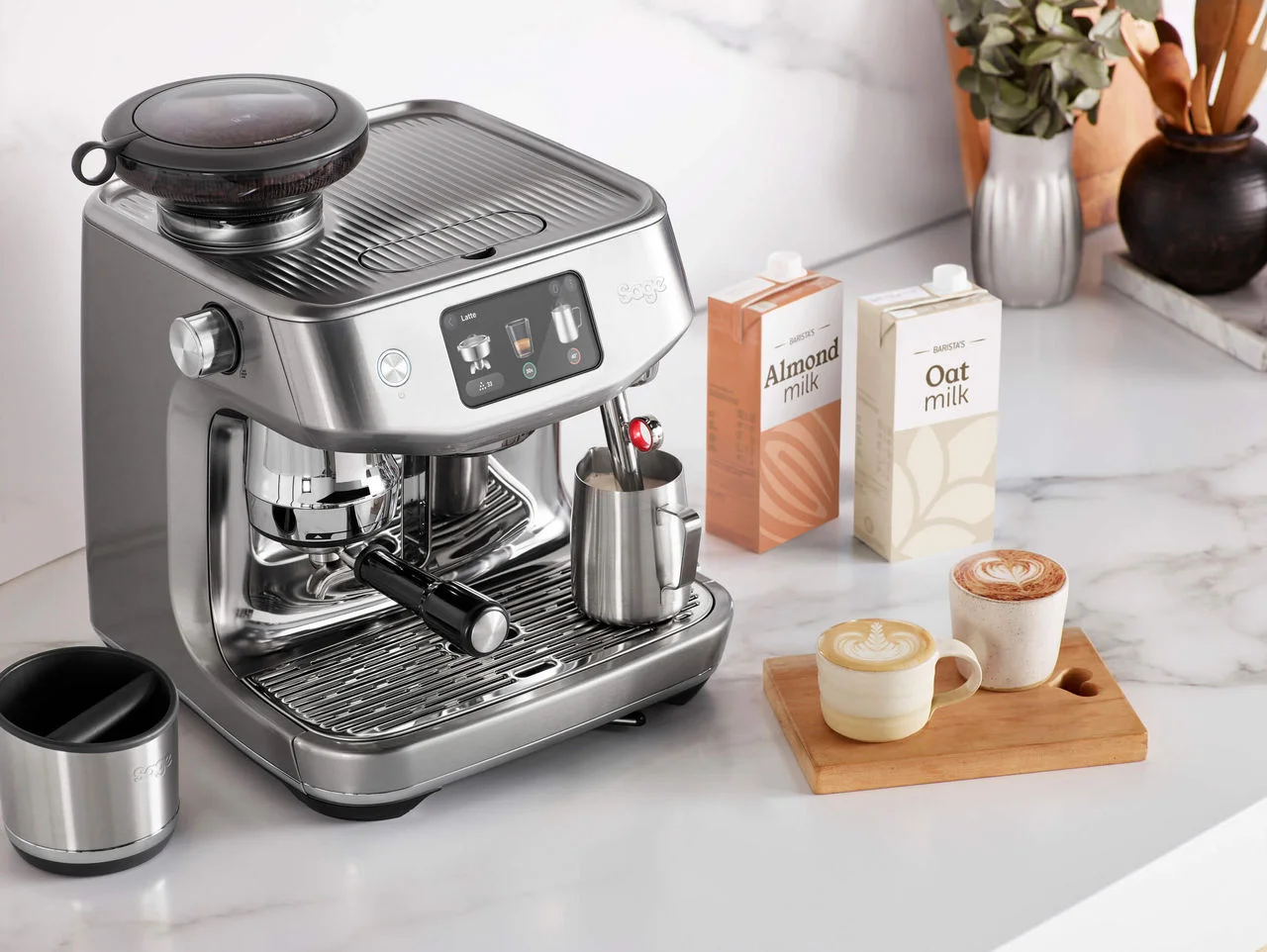
The proper equipment is essential, but some types of milk are better for creating microfoam than others. What's the best milk for frothing, then? We can recommend multiple options, whether you prefer classic dairy or the plant-based variety.
Milk froths when heated, which allows it to form into a foam. It also needs to be agitated—whether stirred with a whisk, electric hand mixer, or steam wand—to force air into the liquid and generate the tiny bubbles that make up microfoam.
Some types of milk froth better than others on account of their protein and fat content.
The more fat milk contains, the creamier and more voluminous the froth will be, as the fat helps stabilise the foam. Milk proteins act as emulsifiers to help blend the fat, water, lactose, and protein content into the thick microfoam needed for latte art.,
What's the best dairy milk for frothing? Whole and Jersey milk work very well, but you can also consider skimmed and lactose-free milk.
Whole milk is cow's milk that retains all its original fat content. It tends to make the most stable foam, especially when heated, which helps liquefy the fat content and allows for better emulsification.,
Jersey milk comes from Jersey cows—a British cattle breed raised on Jersey, the largest of the Channel Islands. It's known for having more butterfat and protein than regular whole milk—the two most critical components of a good froth. It’s not typically used for your day-to-day coffee, but it makes a wonderfully decadent treat when you’re after something special.
Skimmed or semi-skimmed milk has some, most, or all of the natural fat removed. It can still be frothed into a lightweight foam for your go-to coffee drink, but it won't be as creamy as whole milk. Skimmed microfoam will also typically have a larger bubble size, making it less stable, so the airy volume won't last as long.
Lactose-free milk is cow's milk with the natural sugar content removed, making it easier for some people to digest. This type of milk isn't as sweet or creamy as full-fat, regular milk and sometimes contains an enzyme that helps break down lactose. Though you can still make frothed milk with it, these factors can affect the consistency and stability of the foam.
According to a 2024 Innova survey, one in three people in the UK prefer or are open to drinking a plant-based milk alternative in their coffee. Luckily for non-dairy milk drinkers, today’s market offers a wide variety of options. From cashew and hemp milk to coconut and even rice milk, there’s no shortage of plant-based milk choices to sip, swirl, and savour in your favourite coffee beverage. But, as with cow's milk, some types froth better than others.
Oat milk is made by blending rolled oats with water, then pouring it through a strainer to remove the solids. Formulas vary in terms of how much fat (typically from oils) and sugar are added, which can affect how well oat milk froths.
But its natural protein content and creamy consistency make this plant-based option a frothing favourite among baristas. Beyond offering a thick, stable foam, oat milk is also the most popular non-dairy milk bought in the UK.
Soya milk is a plant-based milk made with soybeans, water, and sometimes sweeteners, flavourings, or other additives. Although the natural proteins in soya milk may curdle at high temperatures, it can create a thick, short-lived microfoam.
Other dairy-free milk options can be blended into foam for coffee drinks. But brands and formulas use different ingredients that might help or hinder the process. For instance, almond milk is often too watery to produce a thick foam, whereas coconut milk might be too oily.
To achieve the best milk froth for café-style drinks at home, you'll need the right tools and should know the proper milk temperature and techniques to use.
You can froth milk at home using several tools, which you may or may not already have in your kitchen. Steam wands and electric milk frothers are designed specifically for this purpose, but you can also use a blender, French press, or whisk.
You should always start with cold milk before blending, whether you choose dairy or a plant-based option.
However, heating cow's milk with a steam wand or electric whisk can generate more voluminous foam than soya and oat milk. But when agitating and aerating oat, soya, and almond milk without heat, these options tend to create a thicker foam than cold-frothing dairy milk.
When making milk foam for coffee drinks, avoid these common mistakes:
● Using the wrong type of milk – The best milk for frothing is usually whole milk or oat milk. Other types, like almond milk and coconut milk, might not work as well.
● Overheating the milk – Some heat can help with frothing, but milk that's too hot may cause curdling or affect its ability to form bubbles.
● Placing the steam tip too far down (or not far enough) – The tip of the steam wand should be fully submerged in the milk but not too close to the bottom of the pitcher. This allows the milk to "roll."
● Not allowing the milk to “roll" – When whisking or steaming milk, you want the milk to whirl in a rolling, wave-like motion to create dense microfoam with small bubbles.
Sage has what you need to be your own barista and make café drinks at home. Shop coffee grinders for freshly ground beans, specialty espresso machines with integrated milk wands, and coffee accessories for the perfect extraction, temperature, and filtration. Many of our machines also feature Auto MilQ technology, which automatically textures milk—including dairy alternatives—for silky, barista-style results every time.
Sources:
1. Soft Matter. The bubbly life and death of animal and plant milk foams. https://pubmed.ncbi.nlm.nih.gov/39370983/
2. Barista Magazine. Let's Talk About: Alternative Milk. https://www.baristamagazine.com/lets-talk-about-alternative-milk/
3. Journal of Animal Science and Technology. A comparative study on milk composition of Jersey and Holstein dairy cows during the early lactation. https://pmc.ncbi.nlm.nih.gov/articles/PMC7416159/
4. Specialty Coffee Association (SCA). Mapping the Market: An Overview of Plant-Based Beverages' Sensory Attributes. https://sca.coffee/sca-news/25/issue-19/mapping-the-market-an-overview-of-plant-based-beverages-sensory-attributes
5. International Dairy Journal. Effect of steam frothing on milk microfoam: Chemical composition, texture, stability and organoleptic properties. https://www.sciencedirect.com/science/article/abs/pii/S0958694622001601
6. Food Science and Technology. Effect of milk homogenisation and foaming temperature on properties and microstructure of foams from pasteurised whole milk. https://www.sciencedirect.com/science/article/abs/pii/S0023643807003970
7. International Dairy Journal. Effect of foaming temperature and varying time/temperature-conditions of pre-heating on the foaming properties of skimmed milk. https://www.sciencedirect.com/science/article/abs/pii/S0958694607002403
8. Fresh Cup. Will It Oat? Oat Milk's Explosive Entry Into Coffee—and How It'll Continue to Transform the Food Industry. https://freshcup.com/will-it-oat-oat-milks-explosive-entry-into-coffee-and-how-itll-continue-to-transform-the-food-industry/
9. Fresh Cup. Latte Art and Alternative Milks: The Good, The Bad, and the Tasty. https://freshcup.com/latte-art-and-alternative-milks-the-good-the-bad-and-the-tasty/
10. Beverages. Barista-Quality Plant-Based Milk for Coffee: A Comprehensive Review of Sensory and Physicochemical Characteristics. https://www.mdpi.com/2306-5710/11/1/24
11. University of Melbourne Department of Chemical Engineering. Frothing. https://chemical.eng.unimelb.edu.au/dairy/research/frothing
12. Innova Market Insights. Iced Coffee Trends in the UK. https://www.innovamarketinsights.com/trends/iced-coffee-trends-in-the-uk/