Iced coffee is becoming a more popular beverage of choice in the UK, with sales up 22% in the last five years.
How to make cold foam for iced coffee
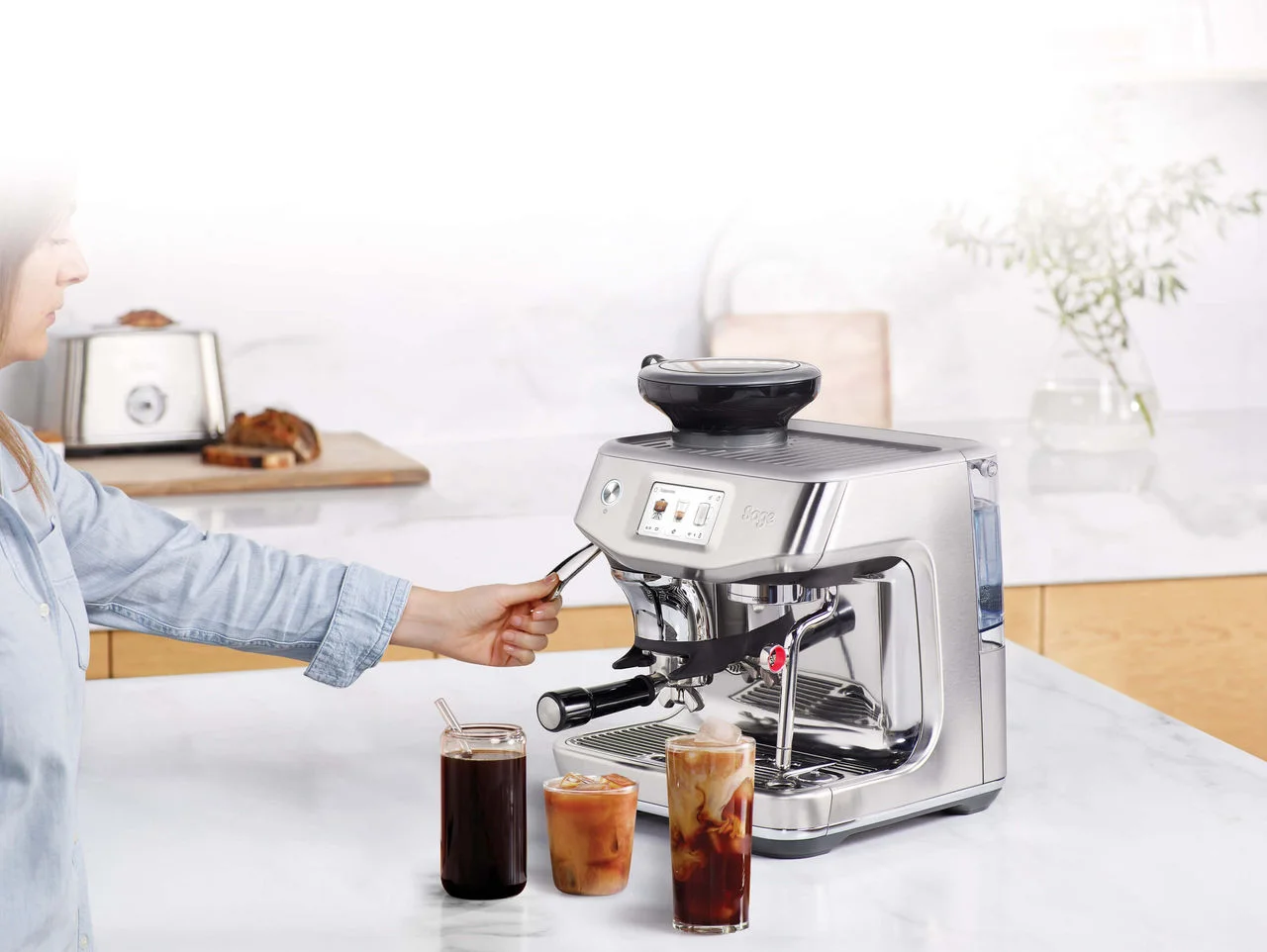
If you enjoy cold brew or coffee and want café-style drinks at home, it's worth learning how to make cold foam to level up your at-home brew.
What is cold foam?
Cold foam is a coffee topper. Similar to whipped cream or thick coffee creamer, it's fluffy and airy but not as heavy since it's made with milk instead of cream. While steamed microfoam is warm and generally used for hot coffee drinks, cold foam is mostly used with cold brew or iced coffee.
The light foamy structure of cold foam allows it to float on top of liquid rather than sink down, as with a hot latte. It can be sweetened slightly, flavoured with simple syrup, or kept simple with plain milk.
Ingredients and tools you'll need to make cold foam
When making cold foam at home, you'll need milk, sweetener or flavouring (optional), and equipment for frothing.
Choosing the right milk for cold foam
Cold foam can be made with cow's milk or a non-dairy alternative. If you prefer dairy milk, the best option is skim milk (with all or most of the fat removed). This keeps the finished foam light and airy while preventing it from dissolving into the coffee below for as long as possible.
For plant-based milks, soya, oat, and almond milk tend to be the best. In some cases, these non-dairy options may even generate more volume and a longer-lasting cold foam than cow's milk.
Sweeteners and flavour additions
Some milks are already slightly sweet without needing to add anything. Skim milk contains lactose, a naturally occurring sugar. Oats also have some natural sugar in the form of sucrose. Oat milk and other plant-based milks can be sweetened with cane sugar, rice syrup, barley malt, or stevia.
You don't have to sweeten cold foam when making it at home. But if you'd like, you can add a small amount of sugar, maple syrup, allulose, or stevia. Some people like to infuse flavourings to customise the taste, such as vanilla syrup, almond extract, cinnamon, or nutmeg.
For instance, you can mix sugar, caramel syrup, and a dash of cinnamon to make a foamy topper for iced cinnamon-caramel cold brew coffee. Bonus points if you learn how to make homemade cold brew from scratch!
Frothing tools
You can make cold foam using a variety of tools and coffee accessories, some of which you might already have. An electric milk frother, hand mixer, or battery-powered whisk can aerate the milk to create the tiny bubbles to stabilise the foam. A traditional blender can work as well. Cold foam can even be made manually with a cocktail shaker, metal whisk, or French press.
Depending on the method, you might also need a container with a wide opening and preferably a spout for easy pouring, such as a liquid measuring cup or milk pitcher.
How to make cold foam, step by step
Here's how to make your own cold foam using an electric whisk or hand mixer:
1. Pour 120 millilitres (mL) of cold milk into your frothing container.
2. Add any flavourings or sweeteners to your liking (optional).
3. Holding the container steady with one hand and the electric whisk in the other, insert the stainless steel whisk head into the milk so it's submerged but not touching the bottom of the container.
4. Turn on the whisk and let it whip the milk for about 30 seconds or until it's roughly twice the original volume (240 millilitres) with soft peaks.
Here's how to make cold foam using the other tools we mentioned (with 120 millilitres of milk sweetened or flavoured to your liking):
● Blender – Turn on the blender for 15 to 30 seconds on medium or high speed until the milk foams and doubles in volume.
● Cocktail shaker – Place the lid on the shaker, ensuring it's closed tightly. Shake vigorously for up to a minute or until the milk turns to foam.
● French press – With the milk in the carafe and the lid in place, continuously pump the plunger for 30 to 60 seconds.
● Metal whisk – With the milk in a bowl or liquid measuring cup, whisk it as fast as you can until it doubles in volume. This may take a few minutes.
Common mistakes to avoid when making cold foam
Having trouble getting your milk to foam? You could be making one of these common mistakes.
Using the wrong milk or too much liquid
As noted, some types of milk work better for making cold foam than others. The best options are skim milk, soy, almond, and oat.
Also, using too much milk can make it harder to aerate the liquid, depending on the tool you're using. Small amounts are best. Start with 60 to 120 millilitres of milk.
Over-frothing or under-frothing
Over-frothing can create too many bubbles, leaving you with an overly airy cold foam that quickly dissolves into the coffee below. Under-frothing simply won't result in the fluffy, stable texture of cold foam.
Not using cold tools and ingredients
Cold milk tends to foam better than warm milk, so always start with chilled milk. It can also help to have cold tools. If possible, place your frothing container and whisk in the refrigerator or freezer for at least a couple of hours before getting started.
Fluffy, frothy, and made at home
Sage has all the tools and equipment you need to become your own barista, including premium espresso machines and coffee grinders.
We also carry various coffee accessories and other kitchen tools for creating cold foam, like the Pro Control Jug, Shake & Take cocktail shaker, and all-purpose blenders.
Explore all our kitchen appliances to improve your home coffee bar today.
Sources:
1. Innova Market Insights. Iced Coffee Trends in the UK. https://www.innovamarketinsights.com/trends/iced-coffee-trends-in-the-uk/
2. Sprudge. What Is Cold Foam?. https://sprudge.com/what-is-cold-foam-216265.html
3. Fresh Cup. What's Up With Cold Foam?. https://freshcup.com/whats-up-with-cold-foam/
4. Barista Magazine. Let's Talk About: Alternative Milk. https://www.baristamagazine.com/lets-talk-about-alternative-milk/
5. University of Melbourne Department of Chemical Engineering. Frothing. https://chemical.eng.unimelb.edu.au/dairy/research/frothing
6. Soft Matter. The bubbly life and death of animal and plant milk foams. https://pubmed.ncbi.nlm.nih.gov/39370983/
7. Fresh Cup. Latte Art and Alternative Milks: The Good, The Bad, and the Tasty. https://freshcup.com/latte-art-and-alternative-milks-the-good-the-bad-and-the-tasty/
8. Perfect Daily Grind. Exploring innovation in cold milk foam for coffee. https://perfectdailygrind.com/2023/07/cold-milk-foam-automated-equipment/
9. Perfect Daily Grind. How can baristas foam milk for specialty coffee without using steam?. https://perfectdailygrind.com/2023/04/how-to-foam-milk-for-specialty-coffee-without-steam/
10. Beverages. Barista-Quality Plant-Based Milk for Coffee: A Comprehensive Review of Sensory and Physicochemical Characteristics. https://www.mdpi.com/2306-5710/11/1/24
11. Barista Magazine. 4 Refreshing Ways to Get Creative with Cold Brew. https://www.baristamagazine.com/4-refreshing-ways-to-get-creative-with-cold-brew/
12. The Kitchen as Laboratory. Sixteen. Why Does Cold Milk Foam Better? Into the Nature of Milk Foam. https://www.degruyterbrill.com/document/doi/10.7312/vega15344-017/html