Whole beans vs. ground coffee

Making coffee at home can involve varying levels of effort.

You can opt for an automatic filter coffee maker that handles most steps with the press of a button, go with a single-serve machine that uses pre-portioned pods, or take a more hands-on approach with an espresso machine.

Beyond the coffee-making method, you'll want to decide whether to use pre-ground coffee or grind whole beans fresh each day. Which is best for taste? What about cost savings, time commitment, and convenience? Get answers in our guide to whole beans vs. ground coffee

Whole beans vs. ground coffee: A quick overview

More people are not only making their coffee at home but also choosing whole beans over the pre-ground variety. But why is this?

Although we recommend grinding whole beans in most cases, there are many reasons someone might prefer pre-ground coffee, and it's a personal choice in the end. Here's what to consider when comparing ground beans and whole coffee bean varieties. 

What's the difference in form and function?

Whole-bean coffee is roasted, unground coffee beans. All coffee must be ground at some point before brewing it with hot water. You can either grind the whole beans yourself or buy bags of pre-ground coffee that are ready to go in the filter.

When you start with whole beans, though, you have the option to grind them to the grind size you need for the type of coffee you're making. For instance, drip coffee calls for medium coarseness, espresso uses very finely ground coffee that can be compressed, and coarsely ground coffee is recommended for French press coffee.

Packaging, shelf life, and freshness impact

Both whole-bean and pre-ground coffee are typically packaged in sealed bags. Unopened pre-ground coffee can be good for a few months, but after opening the package, it should be used within a few days—or a week at most.

Unopened whole-bean coffee can have a shelf life of up to a year, though it’s still recommended to use coffee beans within 3 months of the roast date for the best quality. Once open, and if stored properly (ideally in an airtight canister away from light and heat), the beans can last a month or so.

Even slight temperature changes can affect overall coffee freshness and how coffee is extracted from different grind sizes. So, for the freshest brew and a consistent taste, move the roasted coffee beans from their storage container directly into the grinder, then grind and brew right away.
Breaking down the costs of whole beans vs. ground coffee 

Of course, cost is another big consideration when deciding what type of coffee to buy. You'll want to think about the price per kilo and the expense of coffee-making equipment.

Price per kilo: whole vs. pre-ground

Due to its quality, pre-ground coffee is usually more affordable than whole roasted coffee beans. However, since properly stored beans last longer, there might be less waste, and you won't need to replenish your stock as often.

Coffee-making equipment costs

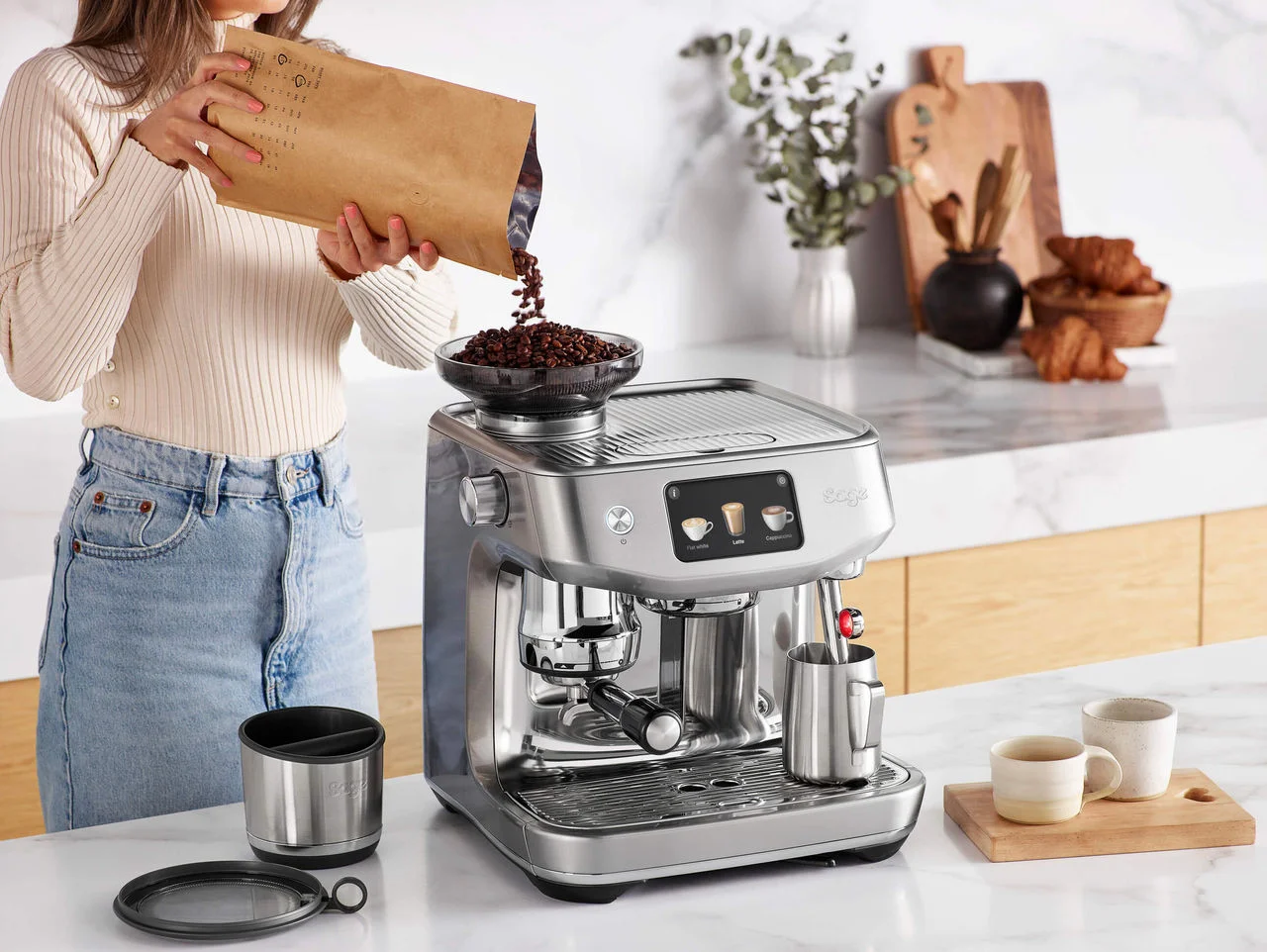
If you buy whole beans, you'll need a way to grind them at home. You can purchase a standalone grinder or get an all-in-one espresso machine with a built-in grinder. Compared to traditional blade grinders, a high-quality conical burr coffee grinder is ideal for getting a more uniform grind size while minimising heat for the best flavour.,

As mentioned, you'll also need a proper storage container to ensure your coffee beans stay fresh as long as possible.

Value over time

Even though whole coffee beans cost a bit more per kilo, they may provide a better value over time.

Does freshness affect how much coffee you use?

Like most dry goods, coffee becomes stale over time. Freshly roasted whole beans will have a longer shelf-life, and when you grind them fresh before each use, you'll get a vibrant, flavourful cup of coffee. Meanwhile, you might need to use more from an opened bag of pre-ground coffee to achieve the same taste.

Waste and spoilage considerations

As noted, buying whole beans and storing them in an airtight container in a cool, dry place away from direct light will help them last as long as possible. That way, you may not have as much waste as you would with a bag of pre-ground coffee that spoils within a week.

Smart ways to save on coffee

If you're set on whole-bean coffee (a wise choice), there are ways you can save money with at-home brewing.

Buying in bulk or subscription services

One way to save money on coffee at home is to buy whole coffee beans in bulk. A larger bag might be up to 1 kg, but they vary in size.

You can also look into coffee subscriptions that offer monthly deliveries of freshly roasted whole-bean coffee. Roasters often offer discounts for those who sign up for recurring orders.

Grinding at home for better yield

Some premium coffee makers (such as espresso machines) have integrated grinders. However, grinding your own beans with a separate grinder can be a budget-friendly option for any coffee enthusiast. Though hand grinders are the most affordable, electric burr grinders are convenient and consistent.

Whole beans vs. pre-ground coffee: Final verdict

When deciding between whole beans and pre-ground coffee, think about your coffee-drinking habits, lifestyle, and kitchen space. While convenience shouldn't be overlooked, freshly ground whole beans are recommended for optimal taste.

Over time, purchasing freshly roasted whole beans, storing them in a sealed canister, and grinding them yourself at home can save you money. What's more, by preserving the aroma of the bean, you can enjoy a better-tasting cup with a more powerful flavour.

If you need a high-quality burr coffee grinder with adjustable grind size and dose control or other coffee accessories, such as a storage container or kettle, shop Sage. We make it easy for every coffee enthusiast to shop all our coffee products in one place, no matter their preferred brewing method.


Sources: 

1. Sprudge. Consumer Demand Study Finds Folks Are Going For Whole Bean Coffee. https://sprudge.com/consumer-demand-study-finds-folks-are-going-for-whole-bean-coffee-255722.html

2. Applied Food Research. Effects of grind size, temperature, and brewing ratio on immersion cold brewed and French press hot brewed coffees. https://www.sciencedirect.com/science/article/pii/S2772502223000719

3. Food Packaging and Shelf Life. Effects of different coffee storage methods on coffee freshness after opening of packages. https://www.sciencedirect.com/science/article/pii/S2214289422000850

4. Scientific Reports. The effect of bean origin and temperature on grinding roasted coffee. https://www.nature.com/articles/srep24483

5. Perfect Daily Grind. Is Pre-Ground Coffee Ever Better Than Freshly Ground?. https://perfectdailygrind.com/2018/12/is-pre-ground-coffee-ever-better-than-freshly-ground/

6. CoffeeGeek. Five Tips for Better Home Coffee. https://coffeegeek.com/blog/beginners/five-tips-for-better-home-coffee/

7. The Craft and Science of Coffee. Chapter 13 - The Grind—Particles and Particularities. https://www.researchgate.net/profile/Adriana_Farah2/publication/312184186_Human_Wellbeing-Sociability_Performance_and_Health/links/5f90dba3458515b7cf937346/Human-Wellbeing-Sociability-Performance-and-Health.pdf

8. Fresh Cup. Behind the Headlines: Whole-Bean Coffee Sales Are Up—But Why?. https://freshcup.com/behind-the-headlines-whole-bean-coffee-sales-are-up-but-why/

9. Perfect Daily Grind. How home coffee grinders are leading the prosumer market. https://perfectdailygrind.com/2024/10/home-coffee-grinders-prosumer-market/


Whole beans vs. ground coffee: Which is best?