Brewing espresso at home can be convenient with a premium automatic or semi-automatic machine. But getting the flavour right requires practice and knowledge about espresso extraction.
What causes sour espresso?
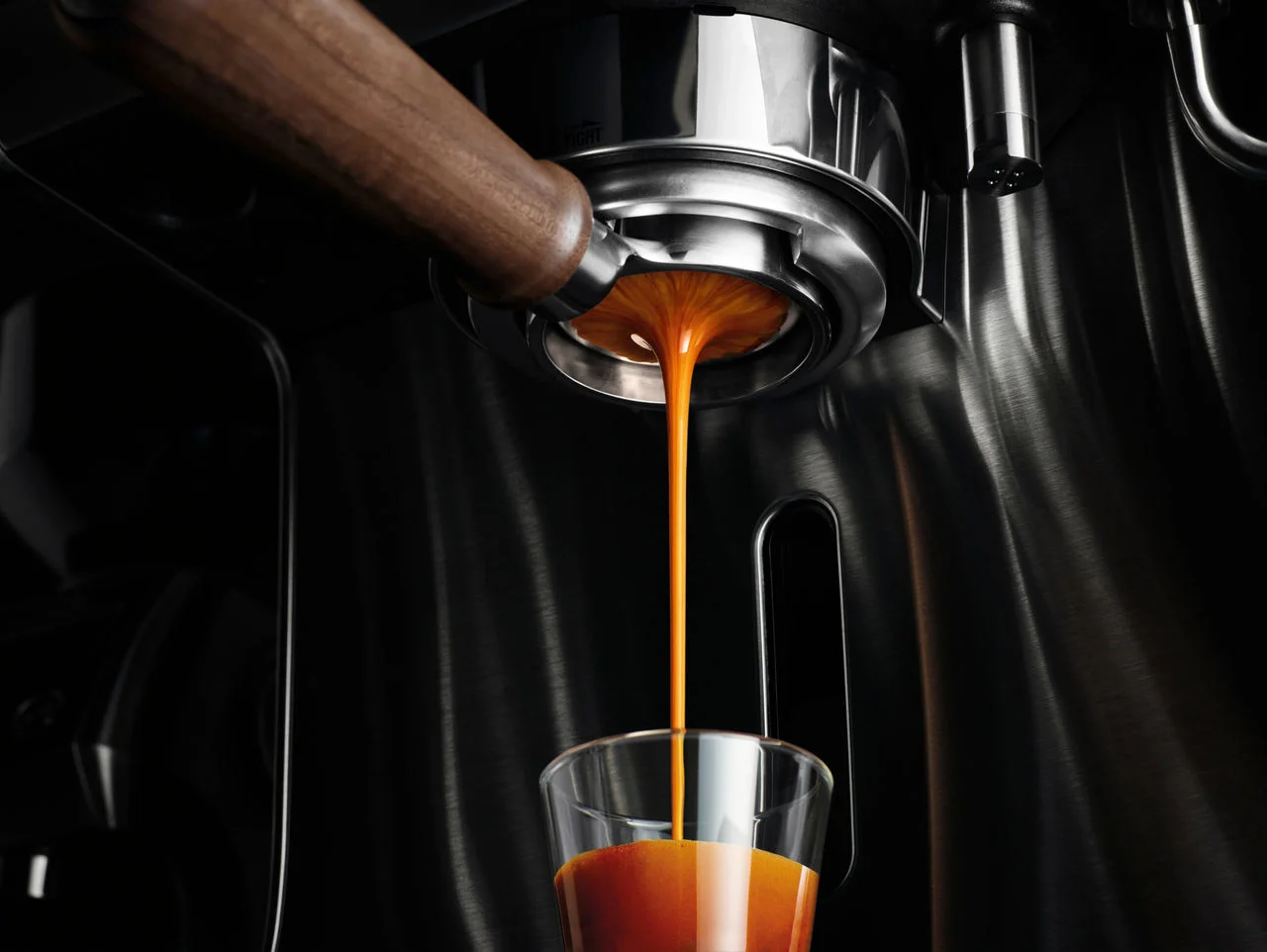
Sour espresso is one of the most common complaints among home brewers.
A sour, tart, bitter, or sharp taste could be an issue with the espresso grind size, extraction time, or water temperature. We'll go over these and other possible causes below.
Key points:
● Sour-tasting espresso often means the coffee wasn't extracted properly.
● Insufficient extraction can be caused by using the wrong grind size, incorrect water temperature, or insufficient brewing time.
● Other factors contributing to a sour taste may include stale or light-roast beans, unfiltered water, or mineral buildup in the espresso machine.
Key factors behind sour espresso
Why is my espresso sour? There are several possible reasons why your espresso may taste sour, bitter, or acidic. Here are the critical factors behind sour-tasting espresso:
● Grind size – The grind size needs to be just right for espresso extraction. Too coarse results in under-extraction and potentially sourness. Coffee grounds should be fine.
● Extraction time – Pulling an espresso shot too fast speeds up the extraction and can result in sharp, acidic flavours.
● Water temperature – Using water that's too cool can prevent espresso from extracting properly. Opt for room temperature water, if possible.
● Coffee beans – Very light roasts have more natural acidity, sometimes with floral or tea-like notes. When finely ground and used for espresso, light-roast coffee can leave a sour taste. This can happen with stale coffee beans as well, which is why it is so important to keep your espresso beans fresh.
How to fix sour espresso
Here's what you can try if your espresso shots are tasting sour:
● Adjust the grind size – Use finer ground coffee beans to slow down extraction. But don't make them too fine, as this can make extraction too slow or clog the flow.
● Use the right water temperature – The temperature should be between 92 and 96 °C for espresso.
● Extend the brew time – Try increasing the brew time slightly to balance the flavour and neutralise any sour, sharp, or acidic notes.
● Use fresh, high-quality beans – To avoid sourness from stale beans, always use fresh, whole coffee beans and grind them before each use. Consider picking up freshly roasted beans from your local roaster or signing up for a coffee bean subscription plan.
● Choose the best roast – Medium or dark roasts are ideal for espresso, especially if you're trying to minimise acidity or a sour taste. Darker beans are soluble but can still withstand the high pressure of espresso extraction.
Tips for consistently smooth espresso
To make consistently smooth, balanced, full-bodied espresso at home, follow these best practices:
● Store coffee beans properly – After opening a new bag of coffee beans, store any remaining beans in an airtight container away from light, heat, and moisture. This will keep them fresh for about a month.
● Use finely ground coffee beans – Again, espresso calls for finely ground coffee. A burr grinder is best for getting the precise grind size. You can often preset the size you need for espresso—that way, you don't have to adjust it each time.
● Use fresh, filtered water daily – Before each use, purge your espresso machine of any remaining water, and add fresh water to the reservoir daily. Filtered or reverse-osmosis water is ideal because a moderate level of minerals creates the best-tasting espresso.
● Clean and descale regularly – Rinse or wash all external parts of your espresso machine daily, and periodically descale the system using the brand's recommended solution. This will help ensure residual oils or mineral buildup aren't contributing to an odd taste.
Matching your espresso method to your machine
A semi-automatic espresso machine is great for experienced at-home baristas. It gives you more control over each step of the brewing process, allowing you to fine-tune the results.
However, an automatic espresso machine, like the premium systems from Sage, helps take the guesswork out of making café-level coffee drinks. With integrated burr grinders, low-pressure pre-infusion, and PID temperature controls, these automated machines use professional-level extraction to produce consistently balanced espresso shots with thick espresso crema on top.,
Perfect espresso with Sage
Sour espresso is avoidable if you know what can cause it and how to correct it. With knowledge, practice, and small adjustments, you can make perfectly bold, concentrated espresso shots at home.
Technique is important, but a high-quality machine is also essential. Explore innovative, barista-quality espresso machines and coffee accessories from Sage.
Sources:
1. Matter. Systematically Improving Espresso: Insights from Mathematical Modeling and Experiment. https://www.sciencedirect.com/science/article/pii/S2590238519304102
2. Cell Press. Brewing a better espresso, with a shot of math. https://www.sciencedaily.com/releases/2020/01/200122110447.htm
3. Engineering Failure Analysis. Anomalous corrosion phenomena observed on electrovalves of coffee espresso machines. https://www.sciencedirect.com/science/article/abs/pii/S1350630713002252
4. American Society of Mechanical Engineers (ASME). How Espresso Machines Work: The Engineering Inside. https://www.asme.org/topics-resources/content/how-espresso-machines-work-the-engineering-inside
5. Perfect Daily Grind. How does temperature stability affect espresso extraction?. https://perfectdailygrind.com/2022/06/how-does-temperature-stability-affect-espresso/
6. Perfect Daily Grind. How can consumers make better espresso at home?. https://perfectdailygrind.com/2023/04/how-can-consumers-make-better-espresso-at-home/
7. Perfect Daily Grind. Coffee Extraction & How It Helps Create The Perfect Cup. https://perfectdailygrind.com/2018/11/understanding-coffee-extraction-for-your-perfect-cup/
8. Foods. Analysis of Volatile Compounds in Coffee Prepared by Various Brewing and Roasting Methods. https://pmc.ncbi.nlm.nih.gov/articles/PMC8230519/
9. Foods. Influence of Flow Rate, Particle Size, and Temperature on Espresso Extraction Kinetics. https://pmc.ncbi.nlm.nih.gov/articles/PMC10418593/
10. Roast Magazine. Sweetness in Coffee: How Do We Define, Analyze and Discuss It?. https://www.roastmagazine.com/stories/sweetness-in-coffee
11. Food Science & Nutrition. Changes in sensory quality characteristics of coffee during storage. https://pmc.ncbi.nlm.nih.gov/articles/PMC3951592/
12. Food Packaging and Shelf Life. Effects of different coffee storage methods on coffee freshness after opening of packages. https://www.sciencedirect.com/science/article/pii/S2214289422000850
13. Daily Coffee News. Pressure and Flow: A Guide for Espresso Technicians. https://dailycoffeenews.com/2019/07/24/pressure-and-flow-a-guide-for-espresso-technicians/