Making coffee at home and running into issues with weak, bitter, or sour-tasting coffee? It could have to do with the water temperature.
Making coffee at home and running into issues with weak, bitter, or sour-tasting coffee? It could have to do with the water temperature.
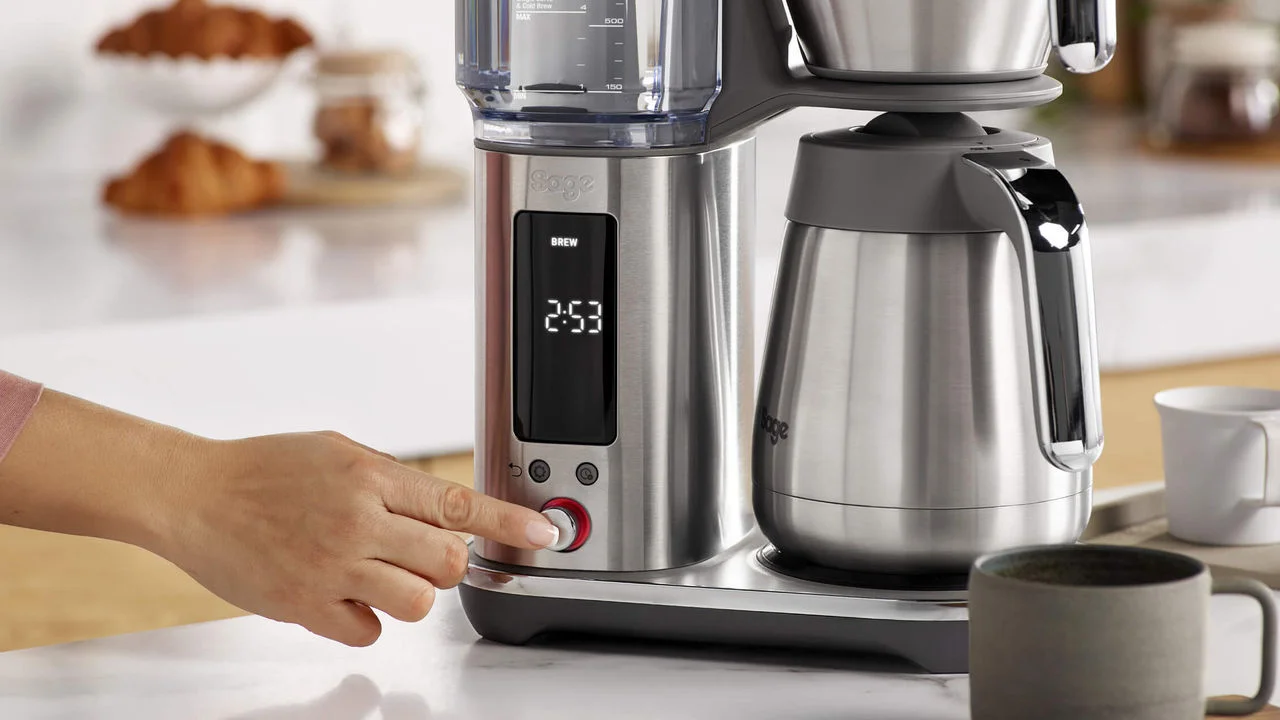
Main takeaways:
● Water temperature controls how coffee is extracted, affecting the aroma, flavour, and mouthfeel.
● The ideal range is generally 92 to 96°C, but espresso and darker roasts may call for a water temp as low as 88°C.
● Using a too-low temperature can result in sour or sharp-tasting coffee; too hot can leave you with a bitter taste or drying mouthfeel.
Water temperature is one of the most overlooked variables in coffee flavour. High-quality machines make it easier to get precise temps, and there are multiple other ways to measure and control them yourself.
Here's what to know about coffee water temperature, including why it matters, what the ideal temp for coffee is, and tips for getting it exactly right when brewing at home.
Water temperature isn't only about how hot your coffee is when you take the first sip. When brewing coffee, the temperature controls how quickly it extracts the soluble compounds—oils, acids, and aromatics—which affect the final flavour and mouthfeel.
Brewing with water that's too cold results in under-extraction, leaving you with sour, weak, or acidic flavours. Water that's too hot will over-extract the compounds, resulting in a bitter, harsh, or burnt coffee.
Temperature consistency is just as crucial as the range. This means using the same water temperature each time you make coffee to get precise, consistent results. This temperature stability is one factor that distinguishes high-end espresso machines from cheap ones.
The ideal water temperature for coffee brewing is 92 to 96°C. That being said, the best coffee temp for optimal extraction depends partly on your brewing method (espresso vs. filter vs. French press, etc.).
Beyond using the proper water temperature, preheating your coffee-making equipment (cups, portafilter, kettle, etc.) is important. This helps prevent heat loss during the brewing process.
The ideal water temperature range for espresso differs slightly from that used for filter coffee.
When making espresso, the typical range is 92 to 96°C. However, some experts suggest a lower range of about 88 to 92°C, especially when using a darker roast. For filter coffee, the general range is 92 to 96°C.
Other things besides your brewing method can influence the ideal water temperature when making coffee. For example, you may want to adjust the temp based on the coffee beans you use.
Darker roasts generally extract more easily, so they can be brewed at slightly cooler temperatures, sometimes as low as 88°C. Meanwhile, a finer grind might require hotter water to extract the soluble compounds.
Coffee beans grown at different altitudes can affect the flavour and brewing requirements. High-altitude beans, for instance, may be more dense and require a higher water temperature (93 to 96 °C) to extract the coffee.
But note that even with these slight differences, you should stay within the general range of 88 to 96°C. Lighter roasts are more difficult to extract, so you can aim for a higher temperature to avoid a sour under-extracted espresso.
Let's examine common issues caused by using the incorrect water temperature when making coffee and what they signify.
● Sour, sharp coffee – If your espresso tastes sour, sharp, or acidic, it could mean the water was too cool, resulting in under-extraction.
● Bitter, drying coffee – Bitter or harsh-tasting coffee with a drying mouthfeel often means the water was too hot.
● Flat or dull flavour notes – Flat, hollow, or dull flavour notes can happen when brewing with inconsistent water temperatures or with overheated water.
If you're heating water in a kettle, try measuring the temperature with a thermometer. This ensures precise temperature control and consistent results, rather than boiling, cooling, and guessing.
The best way to measure and control your coffee water temperature is with a thermometer or a kettle with a built-in temperature gauge.
If you're using a manual brewing method, such as pour-over or French press, allow your boiled water to rest before brewing. Also, pre-wetting your filter with hot water can help with extraction.
A high-quality espresso machine like the innovative models from Sage can ensure precise water temperature for brewing with each use.
These machines use PID temperature control for consistent heat stability, with pre-infusion, gradual pressure build, stable brew boilers, and ThermoJet technology to optimise extraction. They also feature integrated burr grinders for a consistent particle size to support balanced extraction.
For consistently great-tasting coffee at home, always use fresh, whole coffee beans. Grind them with a high-quality burr grinder before each brew, and store them properly in an airtight container—be sure to use them within 30 days of their roasted-on date. Select the appropriate grind size based on your brewing method: fine for espresso, medium-coarse for filter coffee, medium-fine for pour-over.
Make sure your brewing equipment is clean. Purge the steam wand, flush the machine, and rinse or wash all external parts after each use. Regularly descale your machine to prevent flavour disruption.
Use filtered water when brewing coffee, and avoid too-hard or too-soft water. A moderate level of minerals in the water gives you the best-tasting coffee.
Water temperature plays a significant role in coffee extraction and flavour balance. Using a precise, consistent temperature allows you to brew café-quality coffee at home, time after time.
Sage has all the tools and equipment you need for confidence as a home barista. Explore our premium espresso machines with PID temperature control.
Sources:
1. Scientific Reports. Brew temperature, at fixed brew strength and extraction, has little impact on the sensory profile of drip brew coffee. https://www.nature.com/articles/s41598-020-73341-4
2. Barista Magazine. Achieving the Perfect Pourover, Part One: Water Temperature. https://www.baristamagazine.com/achieving-the-perfect-pourover-part-i-water-temperature/
3. Specialty Coffee Association (SCA). How Hot is Hot Enough? Brew Temperature, Sensory Profile, and Consumer Acceptance of Brewed Coffee. https://sca.coffee/sca-news/25/issue-15/how-hot-is-hot-enough-brew-temperature-sensory-profile-and-consumer-acceptance-of-brewed-coffee
4. Daily Coffee News. New Coffee Brewing Study Challenges Water Temp Norms. https://dailycoffeenews.com/2020/10/05/new-coffee-brewing-study-challenges-water-temperature-norms/
5. Foods. Influence of the Brewing Temperature on the Taste of Espresso. https://pmc.ncbi.nlm.nih.gov/articles/PMC7022572/
6. Perfect Daily Grind. Why is thermal stability important for manual coffee brewing?. https://perfectdailygrind.com/2022/08/why-is-thermal-stability-important-for-manual-coffee-brewing/
7. Perfect Daily Grind. How does temperature stability affect espresso extraction?. https://perfectdailygrind.com/2022/06/how-does-temperature-stability-affect-espresso/
8. Applied Food Research. Effects of grind size, temperature, and brewing ratio on immersion cold brewed and French press hot brewed coffees. https://www.sciencedirect.com/science/article/pii/S2772502223000719
9. Food Research. Empirical modelling, simulation and control of coffee brewing. https://www.myfoodresearch.com/uploads/8/4/8/5/84855864/_5__fr-2023-030_taip.pdf
10. Perfect Daily Grind. How Temperature Can Impact Your Experience of Coffee. https://perfectdailygrind.com/2019/11/how-temperature-can-impact-your-experience-of-coffee/
11. Foods. Physiochemical Characteristics of Hot and Cold Brew Coffee Chemistry: The Effects of Roast Level and Brewing Temperature on Compound Extraction. https://www.mdpi.com/2304-8158/9/7/902
12. Foods. The Growing Altitude Influences the Flavor Precursors, Sensory Characteristics and Cupping Quality of the Pu'er Coffee Bean. https://pmc.ncbi.nlm.nih.gov/articles/PMC11640416/
13. Engineering Failure Analysis. Anomalous corrosion phenomena observed on electrovalves of coffee espresso machines. https://www.sciencedirect.com/science/article/abs/pii/S1350630713002252