Sous vide pasteurisation: understanding the process
Whether we’re eating a meal cooked at home or in a five-star restaurant, we usually have two expectations: the food should be delicious and safe to consume.
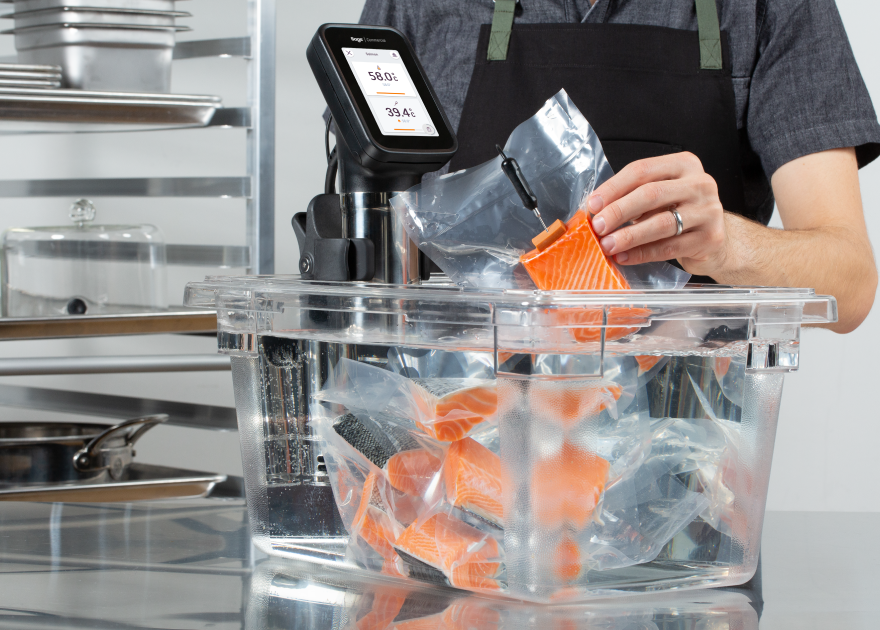
Sous vide, a cooking method that involves sealing food in airtight bags and cooking it in a temperature-controlled water bath, excels at meeting both criteria. In addition to delivering evenly cooked meals with consistency, sous vide also plays a crucial role in food safety through pasteurisation.
But what exactly is sous vide pasteurisation, and why is it critical for ensuring meal safety and quality?
What is pasteurisation?
Pasteurisation is a heat treatment process that aims to reduce harmful bacteria and extend the shelf life of food products. Named after Louis Pasteur, who developed the technique in the 19th century, pasteurisation has since become a cornerstone of food safety.
By heating food to a specific temperature for a set period, pasteurisation effectively kills dangerous food pathogens such as:
• Salmonella
• E.coli
• Listeria monocytogenes
Essentially, pasteurisation achieves the ideal balance between food safety and taste. Cooking food beyond these temperatures, while guaranteed to kill unsafe bacteria, can also make food taste burnt, mushy, or otherwise unpalatable.
The role of sous vide in pasteurisation
This is where sous vide comes into the picture. French for “under vacuum,” sous vide cooking offers a reliable and efficient way to achieve the precise temperatures needed for pasteurisation.
How sous vide achieves pasteurisation
As mentioned, sous vide is essentially a heated water bath for food. Using a specialised tool known as a sous vide circulator, this water bath can be heated to ultra-precise levels, ensuring even, gentle cooking that achieves pasteurisation without overcooking the food.
Benefits of sous vide pasteurisation
Sous vide pasteurisation provides several compelling advantages, including:
• Enhanced flavour – By cooking ingredients gently and evenly, sous vide locks in flavours that are often lost through other traditional cooking methods.
• Improved texture – Precise temperature control helps achieve the perfect texture, from tender meats to delicately cooked vegetables.
• Increased nutrient retention – By reducing exposure to high heat and oxygen, sous vide cooking ensures that food retains more of its original vitamins and minerals.
• Reduced risk of recontamination – Food is prepared in a sealed environment, reducing the risk of external contaminants.
This method eliminates the cold spots sometimes found in conventional cooking, where bacteria can survive. Because of the even heat distribution that sous vide provides, it’s a favourable cooking method for food safety.
Key considerations for sous vide pasteurisation
For all of its benefits, several factors must be considered to ensure effective sous vide pasteurisation:
#1 Time and temperature
The time and temperature required for pasteurisation vary depending on the type of food and its thickness. Due to the numerous unpredictable factors involved with food-borne illness, it is best to consult reliable sources, such as the USDA or FDA, for the most updated information and local regulations.
That said, the International Sous Vide Association (ISVA) offers research-backed guidelines:
For slabs or steaks with a thickness of 2.5 cm (1.0 inch)
• 55°C/131°F – 2:55 hours
• 57°C/135°F – 1:35 hours
• 60°C/140°F – 0:55 hours
• 65°C/149°F – 0:40 hours
For cylinders or sausages with a thickness of 2.5 cm (1.0 inch)
• 55°C/131°F – 2:50 hours
• 57°C/135°F – 1:30 hours
• 60°C/140°F – 0:50 hours
• 65°C/149°F – 0:35 hours
For spheres or meatballs with a thickness of 2.5 cm (1.0 inch)
• 55°C/131°F – 2:30 hours
• 57°C/135°F – 1:15 hours
• 60°C/140°F – 0:30 hours
• 65°C/149°F – 0:15 hours
Thicker cuts of meat or dense vegetables require a longer cooking time to achieve pasteurisation. When working with these kinds of foods, time and temperature must be adjusted.
Safety tips for sous vide pasteurisation
To ensure that your sous vide pasteurisation efforts are safe and effective, consider the following tips:
• Use high-quality, food-grade vacuum seal bags to prevent leaks and contamination.
• Ensure the water bath maintains a consistent temperature throughout cooking.
• Properly seal the bags to remove as much air as possible and prevent floating.
In addition, food should always be kept out of the “danger zone,” between 5°C/41°F and 52°C/126°F for more than 4 hours.
Using sous vide for large batches or commercial use
When scaling up sous vide pasteurisation for large batches or commercial use, it’s essential to maintain consistent temperature control and ensure even cooking across all portions.
High-grade sous vide units also stand out for their ability to maintain consistent temperature over extensive cooking times – ideal for batch preparation or high-volume settings.
Investing in commercial-grade vacuum sealers can further ensure fast, efficient, and safe packaging for a variety of foods, from proteins to vegetables and creamy desserts. Learn more about how a chamber vacuum sealer can serve your professional sous vide cooking needs.
Sous vide precision: Streamline your pasteurisation with Sage
Balancing food safety with culinary quality is like walking a tightrope. Thankfully, sous vide pasteurisation equips us with the scientific precision to strike that perfect balance every time.
And with Sage, we take this expertise to the next level.
The classic HydroPro streamlines the sous vide process with precise temperature control and easy-to-clean components. Similarly, our HydroPro Plus sous vide circulator is integrated with the Sous Vide Toolbox – an intuitive guided cooking system that simplifies the entire sous vide process. Leveraging advanced scientific algorithms, the Toolbox instantly calculates the exact duration needed to ensure perfect pasteurisation for your dish.
Whether you’re an enthusiastic home cook or a bustling commercial kitchen, Sage provides the essential tools for safe, precise, and delicious cooking. Discover how the HydroPro Plus can revolutionise your sous vide experience.
Sources:
American Dairy Association. What is pasteurisation and why do we use it? https://www.americandairy.com/dairy-diary/what-is-pasteurization-and-why-is-it-important/
Dr. Douglas Baldwin. A Practical Guide to Sous Vide Cooking. https://douglasbaldwin.com/sous-vide.html
Science Direct. Sous vide cooking: A review. https://www.sciencedirect.com/science/article/pii/S1878450X11000035
ISVA. Advanced Sous Vide Food Safety. https://www.theisva.org/